Alcohol withdrawal seizures are a serious medical complication affecting approximately 2-5% of people detoxing from alcohol, typically occurring 6-48 hours after the last drink. While not everyone will experience them, they are a critical reason why “cold turkey” detox can be dangerous. Understanding your personal risk factors is the first step in ensuring a safe recovery.
What Are Alcohol Withdrawal Seizures?
A withdrawal seizure medically known as a “rum fit” is usually a generalized tonic-clonic seizure. This means the person loses consciousness and experiences violent muscle contractions.
Unlike epilepsy, these seizures are directly caused by the brain’s sudden chemical rebound when alcohol is removed. Chronic heavy drinking suppresses the brain’s excitatory system; when alcohol stops, this system goes into overdrive (hyperexcitability), potentially triggering an electrical storm in the brain.
Most withdrawal seizures happen early in the timeline – often before other severe symptoms like delirium tremens (DTs) fully set in.
For a complete overview of what happens hour-by-hour, read our Alcohol Withdrawal Timeline Guide.
Key Risk Factors: Who Is Most Likely to Have a Seizure?
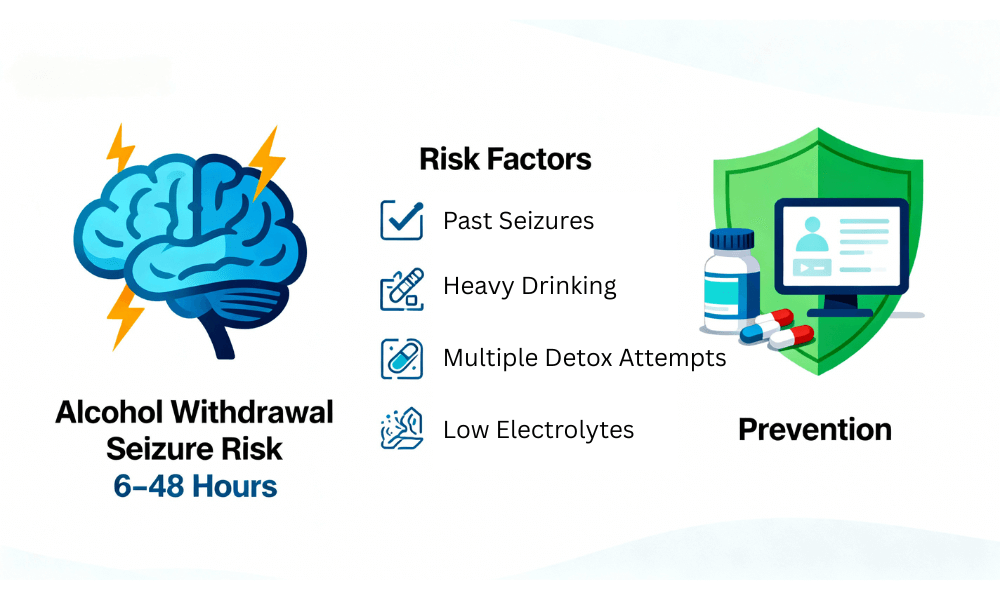
While any dependent drinker carries some risk, clinical data shows certain factors significantly increase the likelihood of a seizure:
- History of Previous Withdrawal Seizures: This is the single biggest predictor. If you’ve had one before, the “kindling effect” means you are at very high risk of having another, often with less alcohol intake than before.
- High Daily Alcohol Intake: Consuming large amounts daily over a long period creates deeper neuro-adaptation.
- Concurrent Substance Use: Using or withdrawing from benzodiazepines or sedatives alongside alcohol amplifies risk.
- Multiple Past Detox Attempts: Repeated cycles of detox and relapse sensitize the brain (kindling), making each subsequent withdrawal more severe.
- Low Electrolyte Levels: Deficiencies in magnesium, potassium, and sodium—common in chronic drinkers—lower the seizure threshold.
Unsure if you fit the high-risk profile? Our Alcohol Detox Guide details medical risks and safety criteria.
Warning Signs to Watch For
Seizures can happen suddenly, sometimes without warning. However, they are often preceded by escalating withdrawal symptoms in the 6-24 hour window:
- Severe, uncontrollable tremors (shakes)
- Extreme agitation or anxiety
- Hyper-reflexia (jumpiness)
- Sensory disturbances (sensitivity to light/sound)
- Insomnia despite exhaustion
Safety Note: If you experience these warning signs, do not attempt to tough it out. You need medical stabilization immediately.
Can You Prevent Withdrawal Seizures?
Yes. Withdrawal seizures are highly preventable with appropriate medical care.
1. Medical Detox Protocols (Benzodiazepines)
The gold standard for prevention is the use of long-acting benzodiazepines (like diazepam or chlordiazepoxide). These medications mimic alcohol’s calming effect on the brain, safely tapering the “excitability” down over several days.
2. Anti-Seizure Medications
In some cases, anticonvulsants like carbamazepine or gabapentin are used as adjuncts to manage risk without the sedation of benzodiazepines.
3. Nutrient Replenishment
Rapid replacement of Thiamine (Vitamin B1) and Magnesium helps stabilize the nervous system and protects the brain from permanent damage (Wernicke-Korsakoff Syndrome).
Liverehab’s Functional Recovery Protocol includes preventative prescription medications and daily monitoring to manage seizure risk safely from home.
Is Home Detox Safe for Seizure Risk?
Home detox is only safe if you are screened as low-to-moderate risk and have a structured medical plan in place.
You should NOT detox at home if:
- You have a history of withdrawal seizures or epilepsy.
- You have had Delirium Tremens (DTs) in the past.
- You live alone or have no reliable support person.
For professionals with a lower risk profile, a medically supervised home detox is a safe alternative to inpatient rehab. It provides the necessary medication (benzodiazepines) and oversight (telehealth checks) to prevent complications while maintaining privacy.
Compare your options in our guide: Inpatient vs. Home Detox Safety.
What to Do If Someone Has a Seizure
If you are supporting someone who has a seizure during detox:
- Call 999/911 immediately. Withdrawal seizures are a medical emergency.
- Protect them from injury. Clear the area of hard or sharp objects.
- Do NOT restrain them or put anything in their mouth.
- Roll them onto their side (recovery position) once the seizing stops to keep the airway clear.
- Time the seizure. Information on duration helps paramedics.
Preventing Future Risk
The only 100% effective way to prevent alcohol withdrawal seizures is to stop the cycle of dependence safely and permanently. The “kindling effect” means that every relapse and subsequent detox increases your future seizure risk.
Completing a full, medically supported detox followed by structured aftercare is your best defense against long-term neurological damage.

Take Action:
Don’t gamble with your brain health. If you are ready to stop drinking, get a professional risk assessment first.
Explore Our Safe Home Detox Packages
FAQ: Quick Answers on Seizures
Most withdrawal seizures occur between 6 and 48 hours after the last drink. They rarely happen after 72 hours unless the detox is complicated by other factors.
Self-tapering is notoriously difficult and often fails although it is not impossible. Medical tapering using benzodiazepines is safer, more consistent, and scientifically proven to prevent seizures.
“Brain zaps” or sudden electric shock sensations are a common withdrawal symptom indicating nervous system instability. While not a seizure themselves, they are a warning sign that you need medical support.
Sources
[1] Alcohol Withdrawal Symptoms, Detox, Timeline, & Treatment https://americanaddictioncenters.org/alcohol/withdrawal-detox
[2] Alcohol Withdrawal: Symptoms, Treatment & Timeline https://my.clevelandclinic.org/health/diseases/alcohol-withdrawal
[3] Alcohol Withdrawal Timeline: What Symptoms to Expect in Days 1-5 https://www.therecoveryvillage.com/alcohol-abuse/how-long-alcohol-detox-take/
[4] Alcohol Withdrawal Timeline & Symptoms – What to Expect – Priory https://www.priorygroup.com/addiction-treatment/alcohol-rehab/alcohol-addiction-withdrawal
[5] Medications for Alcohol Use Disorder – AAFP https://www.aafp.org/pubs/afp/issues/2016/0315/p457.html