Recovery Basics
Alcohol Withdrawal Timeline: Hour-by-Hour Breakdown
By Denise • Originally published December 4, 2025 • Updated December 6, 2025
Alcohol withdrawal follows a predictable but highly individual timeline, usually starting 6–12 hours after your last drink, peaking around 48–72 hours, and easing over 5–7 days.
Free recovery book
Want a full recovery framework, not just one article?
Get the free digital copy of The Sobriety Success Method and work through the broader at-home recovery model.
- 20 chapters across four parts
- Built for recovery from home
- Delivered by email after opt-in
Alcohol withdrawal follows a predictable but highly individual timeline, usually starting 6–12 hours after your last drink, peaking around 48–72 hours, and easing over 5–7 days. The exact symptoms and risks depend on how much, how often, and how long you’ve been drinking, plus your overall health and previous detox history.
What Is Alcohol Withdrawal?
Alcohol withdrawal happens when a person who drinks heavily on a regular basis suddenly reduces or stops alcohol. Over time, the brain adapts to having alcohol present, increasing excitatory chemicals to compensate for alcohol’s sedating effects. When alcohol is removed, those excitatory chemicals surge unchecked, causing tremors, anxiety, sweating, and, in severe cases, seizures or delirium tremens (DTs).
Withdrawal is a medical condition, not a willpower issue. Mild cases may feel like an intense hangover; severe cases can be life-threatening without medical supervision. Understanding the timeline helps you recognize danger signs early and choose the right level of support.
In this guide, you’ll see how symptoms progress in the first 72 hours and beyond. For a full overview of detox options and safety, see our Alcohol Detox & Recovery: Complete Guide (2026).
Alcohol Withdrawal Timeline: Hour-by-Hour
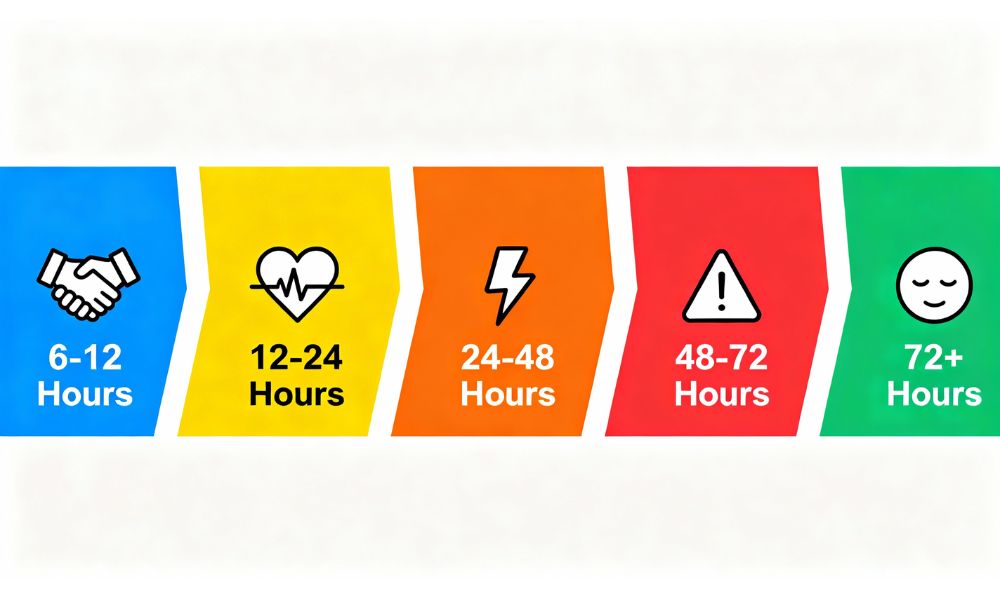
6–12 Hours After Your Last Drink
This is when early withdrawal usually begins. Mild symptoms may start even while alcohol is still in your system.
Common symptoms include:
- Anxiety or feeling “on edge”
- Tremors or “the shakes,” especially in the hands
- Headache, nausea, loss of appetite
- Sweating, rapid pulse, trouble sleeping
For many people, this stage feels like a severe hangover, but it is the first sign that your nervous system has become dependent on alcohol. If you drink to relieve these symptoms, that’s a strong indicator of alcohol dependence.
12–24 Hours: Symptoms Escalate
As blood alcohol levels continue to fall, the brain’s overactivity becomes more pronounced.
You may experience:
- Worsening tremors and anxiety
- Irritability, restlessness, difficulty concentrating
- Nausea, vomiting, stomach discomfort
- Elevated heart rate and blood pressure
Some people develop alcoholic hallucinosis in this window—seeing, hearing, or feeling things that aren’t there while remaining otherwise alert and oriented. This is distinct from delirium tremens but still a warning sign that withdrawal is more than “just” a hangover.
24–48 Hours: Peak of Physical Discomfort
Between 24 and 48 hours, symptoms generally reach their peak for many people.
Potential symptoms:
- More intense tremors and sweating
- Pronounced anxiety, agitation, feeling unable to sit still
- Difficulty sleeping despite exhaustion
- Nausea, vomiting, diarrhea
- Fluctuations in blood pressure and heart rate
Seizures most commonly occur in this period, particularly in those with long-term heavy use, a history of withdrawal seizures, or concurrent use of sedative medications. Anyone who has a seizure, loses consciousness, or develops chest pain in this window needs emergency medical care.
Learn more about seizure and delirium tremens risk during alcohol withdrawal.
48–72 Hours: Highest Risk Window (Delirium Tremens)
This phase is often where the most serious complications arise.
In a small but critical proportion of people, delirium tremens (DTs) can develop, characterised by:
- Severe confusion and disorientation
- Agitation, aggression, intense fear or paranoia
- Fever, heavy sweating, racing heart
- Vivid hallucinations and disturbed sleep-wake cycles
DTs usually start 48–72 hours after the last drink and can last several days. Untreated, mortality has historically been reported in the 5–25% range; with modern medical care, that risk drops significantly but remains serious. This is why people at moderate or high risk are typically advised to detox in a monitored setting rather than alone.
72 Hours and Beyond: Symptoms Ease, New Challenges Begin
By day 3–5, the most intense physical symptoms (shakes, sweating, nausea) usually begin to subside. However, that doesn’t mean recovery is “done.”
Lingering issues often include:
- Insomnia or disrupted sleep
- Fatigue and low energy
- Irritability, anxiety, low mood
- Poor concentration or “brain fog”
- Ongoing cravings for alcohol
These lingering symptoms are sometimes referred to as Post-Acute Withdrawal Syndrome (PAWS) and can last for weeks or months, especially after years of heavy use. Without ongoing support, this is a high-risk period for relapse.
Read more: Alcohol PAWS – Post-Acute Withdrawal Symptoms Explained.
Factors That Can Change Your Timeline
Not everyone follows this exact pattern. Key factors that influence both timeline and severity include:
- How much and how often you drink
- How long you’ve been drinking heavily
- Previous withdrawal episodes (kindling effect)
- Age and general physical health
- Liver function and nutritional status
- Co-occurring mental health conditions
For example, someone drinking heavily every day for 10 years is far more likely to experience prolonged symptoms and complications than someone with a shorter history and lower intake.
For a deeper dive into risk factors and severity, see What Determines Your Detox Timeline & Severity?

When Is It Safe to Detox at Home?
Home detox can be appropriate for some people, but only under clear conditions and medical guidance. Generally, it may be considered if:
- You drink at a moderate but regular level (not extreme daily intake)
- You have no history of seizures or DTs
- Vital signs and basic blood tests are stable
- You have a safe, alcohol-free home environment
- You have access to medical supervision (e.g., telehealth, scheduled check-ins)
- There’s a clear plan for emergency escalation
If any of the following apply, you should not attempt unsupervised home detox:
- Past withdrawal seizures or DTs
- Serious heart, liver, or kidney disease
- Pregnancy
- Active suicidal thoughts or severe psychiatric symptoms
- Lack of safe housing or reliable support
Not sure which category you’re in? Our Alcohol Detox & Recovery Guide explains inpatient, outpatient, and home-based options in detail.
How a Structured Home Detox Protocol Helps
A structured home detox protocol is very different from “going cold turkey” alone. Done correctly, it typically includes:
- A pre-detox medical assessment (history, vitals, bloodwork)
- A personalized plan for medications (e.g., benzodiazepines, thiamine)
- Daily or twice-daily check-ins (video or phone) during the first 72 hours
- Clear guidance on what to expect at each stage of the timeline
- Red-flag criteria for immediate emergency care
- Transition plan into ongoing therapy and support after day 5–7
This approach aims to flatten the curve of withdrawal - reducing peak symptoms, managing risk, and helping you remain functional enough to continue working or caring for family where safe.
Liverehab’s Functional Recovery Protocol is built specifically for high-performing individuals who need medically-informed home detox with minimal disruption. Learn more about our Alcohol Recovery Home Detox program.
When to Seek Emergency Help
Regardless of where you detox, seek urgent medical help if you or someone you’re supporting experiences:
- Seizures or loss of consciousness
- Chest pain, severe shortness of breath, or very irregular heartbeat
- Confusion, disorientation, or inability to recognize people or place
- Hallucinations plus agitation or high fever
- Vomiting that prevents keeping down fluids or medications
These are not “toughing it out” moments; they are medical emergencies.
FAQ: Quick Answers About the Timeline
Can withdrawal start sooner than 6 hours?
Yes. In heavy daily drinkers, early symptoms can begin as soon as 4-6 hours after the last drink, especially if blood alcohol levels fall rapidly.
How long until I feel “back to normal”?
Most people feel physically much better by days 5-7, but mental clarity, mood, and sleep can take several weeks to stabilise. Structured aftercare speeds this up.
Does everyone get seizures or DTs?
No. Only a minority develop severe complications, but it is impossible to guarantee who will. Prior complicated withdrawal, heavy long-term use, and poor health all increase risk.
Sources
- Alcohol Withdrawal Symptoms, Detox, Timeline, & Treatment
- Alcohol Withdrawal: Symptoms, Treatment & Timeline
- Alcohol Withdrawal Syndrome - StatPearls - NCBI Bookshelf
- Alcohol Withdrawal Timeline: What Symptoms to Expect in Days 1-5
- Alcohol Withdrawal Timeline & Symptoms - What to Expect
- Alcohol Relapse Rates & Statistics
- Alcohol Detox at Home vs Rehab: What’s the Difference?
Choose your next step