Live Rehab

  • All-Access Pass
  • Product
  • Programs
    • Alcohol Freedom
  • Articles
    • Alcohol Detox & Recovery: The Complete Guide (2026)
  • Login
  • Get Started Now

Is there a simple drug abuse definition?

Last Modified: December 22, 2013 | Originally created on December 22, 2013 By Nick

Does something like caffeine fall under a drug abuse definition?


Is there a simple drug abuse definition?

Often times, people come to us looking for a specific drug abuse definition hoping that we can provide clear answers in times of definite struggle.  Obviously people ask because they feel as though we might have the answer that tells them if they are dealing with drug abuse or if their problems aren’t really abuse.  Let’s take a look at a simple drug abuse definition from a dictionary:

drug abuse

noun

1. addiction to drugs.

2. substance abuse involving drugs.

(source: http://dictionary.reference.com/browse/drug+abuse?s=t)

Well that doesn’t tell us too much other than an addiction to drugs which we probably could have figured out from the question itself.  So how else can we define drug abuse?  Essentially the definition of drug abuse can be explained as when drug use impacts normal every day actions or life.  For example, having a few drinks every now and again might not constitute drug abuse.  However, if those times when you have a few drinks always leads into negative situations then you might have a problem on your hands.

Official Drug Abuse Definition

Officially speaking the definition of drug abuse, according to University of Maryland Medical Center, is ” the use of illegal drugs, or the misuse of prescription or over-the-counter drugs for at least a year with negative consequences”.  But for many reasons this misses the mark!  What about those people who have problems with legal drugs like alcohol or cigarettes? Do those drugs fit the drug abuse definition as the University of Maryland Medical Center says? Not according to them.

The rest of world sees things differently too.  Take for example the World Health Organization who does not take a definition of drug abuse at all and instead chooses to exclude it because it is too ambiguous for most people. Really they are claiming that the definition of drug abuse can be done in so many ways that one specific answer can’t be right.

You can see that the process of defining drug abuse can be complex and different depending on which resource you ultimately choose to use.  We think that if you feel as though you have a problem with a particular drug then you should be able to define that as drug abuse if you choose to.  Even innocuous drugs such as caffeine can cause a person to be addicted to them and as soon as their world starts revolving around that then it could become addiction.

Why the ambiguity with drug abuse definition?

The ambiguity of a drug abuse definition comes from the medical community wanting to have clearly defined limits, roles and answers to common problems.  The issue is that not everyone fits into a clear, easy one size fits all and some people fall through the cracks.  We try and be as objective as possible to help people when they need it the most.

Hopefully this has helped some of you to understand why we can’t always come up with a drug abuse definition that clearly fits an individual person but we try hard to provide at least a clear path for understanding and then you can choose your own way to deal with it.  Do you have questions we can help you answer?

Filed Under: Blog Tagged With: alcohol, caffeine, drug abuse definition, nicotine?, substance abuse

How does alcohol affect your happiness later in life?

Last Modified: November 16, 2013 | Originally created on November 16, 2013 By Nick

Happy Old Man-cropIt’s an age old question that many people who drink find themselves wrestling with. Does alcohol affect happiness later in life? According to a landmark research out of Harvard the answer, at least for men, is a resounding yes1. In a longitudinal study that covered everything from scrotum size (yes really) to alcohol levels throughout life, Harvard professors and researchers found out that alcohol contributed in extremely negative ways to overall life happiness. The study which started in 1938 and covered 238 students for approximately 75 years discovered many things about happiness and what it means to be so.

Among the findings that we found particularly interesting was that alcoholism was the number one contributing factor to early death, depression and psychosis among the men. While it is nothing that people did not already know about the dangers of alcohol it does underscore the importance of recognizing that alcohol abuse has far reaching impacts all the way throughout life. Alcohol was also noted to be the biggest factor among divorce.

There are some gems however, of course alcohol was not the focus of the study, including those that focused on happiness and love lived longer, more fulfilling lives. We know it can seem hard to focus on these kinds of things in the middle of recovery or after recovery but the important thing to know is that you can be and live a happy life.

Filed Under: Blog

1 in 4 Deaths Attributed to Alcohol, Tobacco or Illicit Drug Use

Last Modified: November 8, 2017 | Originally created on November 5, 2013 By Nick

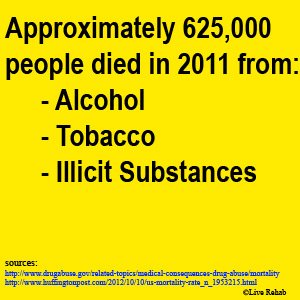
deaths from substancesAccording to the National Institute on Drug Abuse (http://www.drugabuse.gov/related-topics/medical-consequences-drug-abuse/mortality) 1 in 4 deaths can be directly attributed to either alcohol, tobacco or illicit drug use.  That number is staggering considering that according to statistics from 2011 there were approximately 2.5 million deaths (http://www.huffingtonpost.com/2012/10/10/us-mortality-rate_n_1953215.html).  What this essentially boils down to is that about 625,000 people died from alcohol, tobacco or illicit drug use.  The information from NIDA is light on the details and the breakdown of specifics from what caused what, and also what is counted as directly attributable, but it still stands to point out just how incredible these numbers really are.  We dove a little deeper into these numbers to see just what was making up these alcohol deaths, tobacco deaths and illicit drug deaths to see if we could get a better overall picture.

Alcohol Deaths

Alcohol deaths can be a statistic skewed in many different ways.  Do you attribute motor vehicle related incidents? Do the statistics include those where alcohol abuse was not the primary factor?  Either way alcohol deaths in this country and around the world are extremely high.  If you check out what the CDC has to say (http://www.cdc.gov/alcohol/fact-sheets/alcohol-use.htm) they estimate that around 80,000 alcohol related deaths can be directly counted which leaves a hole in our numbers from the guys over at NIDA of 545,000 deaths attributable now to tobacco and illicit drugs.

Tobacco Deaths

If we switch focus to tobacco deaths then according to the CDC (http://www.cdc.gov/tobacco/data_statistics/fact_sheets/health_effects/tobacco_related_mortality/) again, we come up with a whopping 440,000 deaths per year either directly through smoking or through second hand smoke.  This number leaves us with a remaining amount of 105,000 deaths from which illicit drugs make up.  Tobacco deaths resoundingly come from some things we’ve covered previously like lung disease, bronchitis and others.

Illicit Drug Deaths

Here is where it gets a little murkier.  Finding out official numbers becomes a lot less involved with places like the CDC and on to more politically charged sites like Drug War Facts (http://www.drugwarfacts.org/cms/Causes_of_Death) which counts illicit drug use deaths in 2000 at a low 17,000.  The White House (http://www.whitehouse.gov/sites/default/files/ondcp/Fact_Sheets/consequences_of_illicit_drug_use.pdf) pegs those deaths at 37,000 or so in 2007 which gets us a little closer to our figures.

No matter how you slice it, drugs make up a large percentage of deaths in this country and regardless of legal or illegal status we can make changes to some significant areas.  Leave us a thought in the comments section.  What would you do to change these numbers?

Filed Under: Blog Tagged With: alcohol deaths, cdc, illicit drug deaths, tobacco deaths

Does Long Term Marijuana Use Cause Brain Damage?

Last Modified: April 15, 2021 | Originally created on August 12, 2012 By Nick

According to a new study out of the Murdoch Childrens Research Institute there appears to be some credible link between long term usage of marijuana and brain damage.  We know, we know, this is something we have heard bandied around for a while now and every now again someone else shows some link which is countered later down the path.  This study is a little different however because it appears to be focused on white brain matter which is the first of its kind to do so.  At Live Rehab we like to take new studies with a little bit of skepticism before touting them as complete gospel and as such have a few questions which should rightly be answered about the methods and details.

One of the main issues we have with the study and lack of details surrounding their published work is the actual amount of heavy usage.  What they consider heavy usage might be incredibly high and dangerous compared to small occasional users.  Additionally there is not a mention of what age the study used to conduct the research.  While we are sure that they did take these factors into consideration, the media has taken this headline and sensationalized it without asking the pertinent questions. If long term marijuana usage causes brain damage, as their study indicates, we need to know what the circumstances are so that the rehab community can appropriately adjust our approaches.  We have reached out to the Murdoch Childrens Research Institute for clarification on these points and will post an update when/if we receive a response.  The full report, for those with access to the Brain journal is located here http://brain.oxfordjournals.org/content/135/7/2245.full

**UPDATE**

The media contact for the Institute has provided us with a full copy of the study which we will evaluate and hopefully have our questions answered.  According to the full study the users consumed large amounts, on average 147 joints per month and typical long term usage was around 15 years.  Furthermore there is very little cross drug usage/experimentation which is good since it solely focuses on the effects of the marijuana (not including alcohol).

Journal Abstract:

Cannabis use typically begins during adolescence and early adulthood, a period when cannabinoid receptors are still abundant in white matter pathways across the brain. However, few studies to date have explored the impact of regular cannabis use on white matter structure, with no previous studies examining its impact on axonal connectivity. The aim of this study was to examine axonal fibre pathways across the brain for evidence of microstructural alterations associated with long-term cannabis use and to test whether age of regular cannabis use is associated with severity of any microstructural change. To this end, diffusion-weighted magnetic resonance imaging and brain connectivity mapping techniques were performed in 59 cannabis users with longstanding histories of heavy use and 33 matched controls. Axonal connectivity was found to be impaired in the right fimbria of the hippocampus (fornix), splenium of the corpus callosum and commissural fibres. Radial and axial diffusivity in these pathways were associated with the age at which regular cannabis use commenced. Our findings indicate long-term cannabis use is hazardous to the white matter of the developing brain. Delaying the age at which regular use begins may minimize the severity of microstructural impairment.

License Number

2966850441361

License date

Aug 12, 2012

Licensed content publisher

Filed Under: Blog Tagged With: brain, habitual, heavy user, Marijuana Use Cause Brain Damage, usage

Common problems during treatment

Last Modified: June 29, 2021 | Originally created on April 3, 2012 By Denise

Dealing with problems when you are seeking out help for your addiction is something you are going to have to get used to. The process of sobriety is never a straight line. However, there are some problems that are caused by the actual choice of treatment itself.

Many traditional treatment programs or 12-step meetings struggle with these problems because are they are self caused. The introduction of these problems is a major issue because they can cause unneccessary relapse even if the main addiction treatment process is working ok for the individual.

Common problems that can occur in treatment:

  • Recovering individuals as counselors
  • Confrontation as a treatment strategy
  • The use of medication
  • Controlled use

Recoverying individuals

Recovering individuals as counselors can only be good if they have the interpersonal skills and education to back it up.  Often times counselors in recovery don’t have this and then they try to mold the client into their own way of thinking because they simply believe they know it all because they have been through the experience themselves.

Confrontation strategy

Confrontation is not always beneficial in counseling or at least thought that way anymore.  The success rate of recovery is much lower when confrontation is involved. The solution?  Have empathy and compassion and avoid confrontation as much as possible.

Medication usage

There are medications that are prescribed for addicts that may be counterintuitive; meaning trading once addiction for another.  A successful treatment plan will eliminate all drugs, even if they are assumed to help.

Controlled use approach

Some users and abusers believe that they can go through treatment with controlled use.  This doesn’t work as it’s merely the client’s perception of what is controlled.  A treatment plan should only include eliminating the drug of choice completely.

If you are currently getting help for your addiction then you need to be careful to avoid these problems. Alternatively seek out an online addiction recovery program like Live Rehab which can help you recovery without dealing with what we’ve mentioned in this article.

Filed Under: Blog, General

  • « Previous Page
  • 1
  • …
  • 23
  • 24
  • 25

Popular Posts

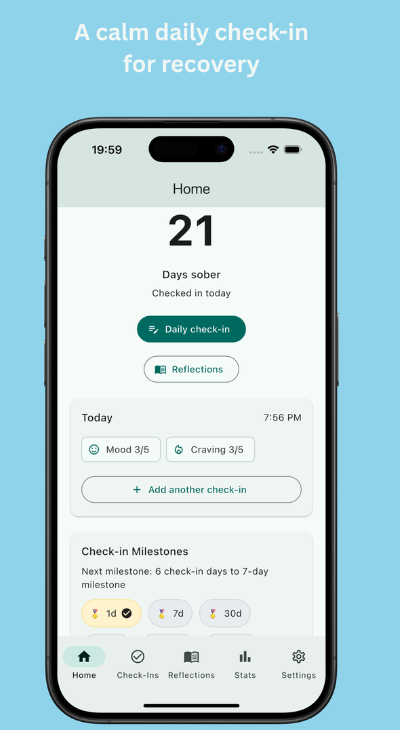
ClearDay Is Now Available on iOS: A Private, Simple Way to Support Recovery

Empowering Your Recovery Journey: Achieve Sobriety from the Comfort of Home with Live Rehab

Alcohol or Substance Abuse in the Workplace

Living Intentionally in Addiction and Recovery

Spirituality in Recovery

What our Students Say

“I’m very much enjoying this course. The instructor is clear, concise, motivating, and knowledgeable.”
☆☆☆☆☆
~ Marla, Udemy Student

“The instructor is highly trained to be providing this course to those who are chemically dependent. The content of the lectures is comprehensive and very informative.”
☆☆☆☆☆
~ Matt, Udemy Student

Recent Posts

ClearDay Is Now Available on iOS: A Private, Simple Way to Support Recovery

January 17, 2026 By Denise

We are excited to announce that ClearDay, our new … [Read More...]

Vitamins and Nutrition for Alcohol Detox: What Your Body Really Needs

December 21, 2025 By Denise

When you stop drinking, your body is not just … [Read More...]

Benzodiazepines for Alcohol Withdrawal: The Gold Standard Treatment

December 18, 2025 By Denise

Benzodiazepines for Alcohol Withdrawal: The Gold … [Read More...]

Tweets by @live_rehab

Tweets by live_rehab

Connect on Facebook

Live Rehab

Favorite Pins

Sobriety on your terms

We understand that traditional rehab may not be a realistic choice for you. If you’re feeling bad about destroying relationships, clouded decision making and being addicted, Live Rehab will guide you in helping you break free.

We’ve helped hundreds of people get sober from home.

Our students are:

– Happy
– Sober
– Clear Headed
– Free from the chains of addiction
– Motivated
– Energetic

Connect with Us

  • Facebook
  • Instagram
  • Pinterest
  • Twitter

Product

Recovery & Sobriety Courses

Pricing

Learn

Comprehensive Alcohol Detox and Recovery Guide (2026)

Blog

Resources

Company

About Us

Contact

Copyright © 2026 Live Rehab

ClearDay is now available on iOS & Android

Free Download

A free & private, local-only recovery support app available on iOS and Android. Download it today.

.      

No thanks, I’m not interested!