Alcohol PAWS symptoms – lingering anxiety, insomnia, mood swings, and brain fog—affect up to 25% of people after acute alcohol detox, often lasting weeks to months and driving most first-year relapses. Unlike the shaking, sweating, and nausea of early detox that resolve in 5-7 days, PAWS involves emotional instability, cognitive difficulties, and physical fatigue that can last weeks to months—making it the single biggest cause of relapse in the first year of sobriety.
What Exactly Is PAWS After Alcohol Detox?
When someone drinks heavily for months or years, their brain chemistry fundamentally changes. Alcohol artificially boosts inhibitory neurotransmitters (GABA) while suppressing excitatory ones (glutamate). During acute withdrawal, this creates dangerous hyperexcitability. But even after the worst physical symptoms subside, the brain continues recalibrating—often for months.
Clinical studies estimate 10-25% of detox completers experience clinically significant PAWS, with symptoms appearing in distinct “waves” rather than constant intensity. These waves create a false sense of security followed by sudden crashes, explaining why so many relapse despite early detox success.
PAWS Timeline & Symptom Waves
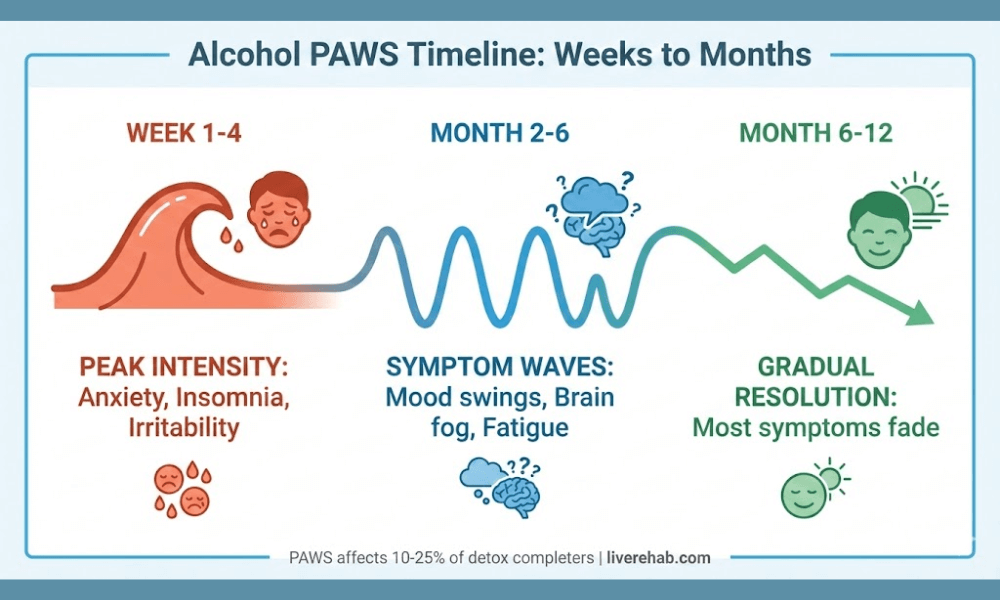
PAWS symptoms follow a characteristic waxing and waning pattern over time, often described by individuals experiencing alcohol PAWS symptoms as unpredictable waves of emotional and physical distress. Understanding this timeline is critical for managing expectations and maintaining commitment to recovery. During these fluctuating phases, individuals may feel periods of relative calm interrupted by sudden symptom flare-ups, which can challenge even the most resilient in recovery.
- Weeks 1-4: Symptoms typically peak, with mood swings, anxiety, and sleep disturbances most severe.
- Months 2-6: Symptoms occur in waves—periods of relative calm interrupted by transient flare-ups.
- Months 6-12: Most people gradually see symptom reduction, though some experience mild effects up to a year after detox.[1]
See Alcohol Detox Timeline section 4 in our complete guide for more about symptom progression.
Common PAWS Symptoms
PAWS affects multiple systems simultaneously:
Emotional Symptoms:
- Irritability and short fuse (even with loved ones)
- Persistent anxiety or free-floating worry
- Clinical depression or anhedonia (inability to feel pleasure)
- Emotional numbness or inappropriate crying
Cognitive Symptoms:
- Persistent “brain fog” and mental fatigue
- Difficulty concentrating or making decisions
- Short-term memory problems
- Word-finding difficulties
Physical Symptoms:
- Chronic insomnia or disrupted sleep architecture
- Vivid, disturbing dreams or nightmares
- Low energy despite adequate sleep
- Heightened sensitivity to stress (physical symptoms from emotional triggers)
These aren’t just “feeling off” – they reflect measurable neurotransmitter imbalances that require targeted management.
Why PAWS Causes Relapse
PAWS symptoms arise because the brain’s inhibitory and excitatory systems remain out of balance long after physical detox. The “kindling effect,” where repeated detox cycles worsen brain sensitivity, amplifies this risk. Additionally, co-occurring mental health diagnoses – in 40 to 60% of cases – compound emotional distress, making relapse more likely without integrated care.
For an in-depth look at risk factors, see Section 6 of our Detox Guide.
How to Manage PAWS Safely
While tapering off alcohol may be part of early detox strategies done under medical supervision, PAWS management focuses more on holistic long-term care rather than substance tapering.
Here are evidence-based PAWS management strategies:
- Prioritize Sleep Hygiene – Maintain consistent sleep schedules, avoid stimulants, and create a restful bedroom environment.
- Optimize Nutrition – Balanced meals rich in vitamins, particularly B-complex and magnesium, support neurological healing.
- Engage in Cognitive Behavioral Therapy (CBT) – Structured therapy assists in reframing negative thoughts and managing anxiety/depression.
- Adopt Regular Exercise – Even 30 minutes daily improves mood, energy, and brain function.
- Use Medication-Assisted Treatment (MAT) – Medications like naltrexone help curb cravings and stabilize mood during recovery.
- Join Support Groups – Virtual or in-person groups provide accountability, reduce isolation, and share coping strategies.
Our aftercare packages combine these elements into a tailored program designed to prevent PAWS-related relapse. Learn more about our options.
When PAWS Becomes Dangerous
Post-Acute Withdrawal Syndrome (PAWS) symptoms are generally manageable with proper support, but alcohol PAWS symptoms can become dangerous and warrant immediate professional intervention when they escalate beyond typical fluctuations. Severe depression accompanied by suicidal thoughts, the onset of psychosis or intense anxiety attacks, or a marked inability to perform daily activities due to cognitive impairment signal critical red flags. At this stage, dual diagnosis treatment programs that integrate comprehensive addiction recovery with specialized mental health care offer significantly improved outcomes. Early recognition and intervention in these severe PAWS cases are essential to prevent relapse, reduce harm, and support long-term sobriety
See Section 8 of our Detox Guide for help deciding the right level of care.
FAQ: Quick Answers About PAWS
Most experience symptoms for 1-6 months; some mild symptoms may persist up to 12 months.
Typically no, but severe mood or cognitive symptoms may require specialized care.
Yes, especially MAT for cravings and antidepressants/anxiolytics when prescribed by professionals.
Sources
[1] Post-acute Withdrawal Syndrome (PAWS) https://www.brightoncenter.com/images/uploads/program_resources/Post-acute_Withdrawal_Syndrome_(PAWS).pdf
[2] Understanding Post Acute Withdrawal Syndrome https://phwellness.com/blog/recovery-resources/post-acute-withdrawal-syndrome/