Live Rehab

  • All-Access Pass
  • Product
  • Programs
    • Alcohol Freedom
  • Articles
    • Alcohol Detox & Recovery: The Complete Guide (2026)
  • Login
  • Get Started Now

How to Break the Cycle of Addiction: A Step-by-Step Guide to Long-Term Recovery

Last Modified: December 4, 2025 | Originally created on April 8, 2025 By Denise

What Does Breaking the Cycle of Addiction Really Mean?

Breaking the cycle of addiction isn’t just about quitting a substance. It’s about changing your habits, mindset, and environment so you can build a better life; one where addiction no longer controls you.

At Live Rehab, we focus on holistic, non-traditional addiction recovery. That means helping you recover at home, without relying on expensive inpatient rehab programs.

Step 1: Understand Your Triggers

Every addiction has a trigger; something that sets off the craving. These can be emotional (like stress or sadness), social (like certain people), or environmental (like places or routines).

Action Tip:
Write down your top 3 triggers and how you usually react to them. Awareness is the first step in breaking the pattern.


Step 2: Build a Personalized Recovery Plan

A one-size-fits-all plan doesn’t work for addiction. You need something tailored to your life, values, and goals.

LiveRehab.com offers online courses and tools to help you do just that; from building healthy routines to managing cravings in real time.

Key Elements of a Good Recovery Plan:

  • Daily structure and routines
  • Emotional support (family, friends, or community)
  • Long-term goals to work toward
  • Coping strategies for when cravings hit

Step 3: Focus on Physical and Mental Healing

Addiction impacts both your body and mind. Recovery means healing both. That includes:

  • Getting enough sleep
  • Eating nutrient-rich foods
  • Exercising regularly
  • Practicing mindfulness or meditation

These steps rebuild your brain chemistry naturally, improving your mood and lowering relapse risk.


Step 4: Replace Addiction with Purpose

Many people relapse because they feel lost or empty. Finding purpose fills that void.

Ask yourself:

  • What gives your life meaning?
  • What hobbies or interests light you up?
  • How can you contribute to others?

Purpose is your most powerful tool in recovery.


Step 5: Stay Consistent, Even When It’s Hard

Recovery is not a straight path. You will have good days and bad days. What matters most is staying consistent.

If you slip, don’t give up. One mistake does not mean failure.

Use tools like our Live Rehab Recovery Journal or daily check-ins to track your progress and stay accountable.


Why LiveRehab.com Works for Thousands of People Worldwide

At Live Rehab, we’ve helped people in over 100 countries recover from addiction at home. No judgment. No shame. Just real strategies that work.

✅ 100% online
✅ Self-paced courses
✅ Affordable and private
✅ Designed for long-term success

Take the First Step Today → Explore Our Programs


Final Thoughts

You can break the cycle of addiction. It starts with small, consistent actions; like the ones above. You don’t need to hit rock bottom. You just need to be ready to take back your life.

We’re here to support you, every step of the way.

Filed Under: Blog, General Tagged With: addiction recovery long-term recovery quit addiction recovery at home Live Rehab mental health non-traditional rehab

How to Start Addiction Recovery From Home – Without Expensive Rehab

Last Modified: March 31, 2025 | Originally created on March 28, 2025 By Denise

Starting addiction recovery doesn’t have to mean checking into a facility or spending thousands of dollars. For many people, the most effective, long-lasting recovery begins right at home.

At Live Rehab, we help people take control of their recovery journey with tools and support designed specifically for at-home addiction recovery. Whether you’re dealing with substance abuse or behavioral addictions, here’s how to get started from the comfort of your own home.

Why At-Home Recovery Works

Traditional rehab can feel overwhelming, expensive, and out of reach. But recovery doesn’t have to look like that. More people are turning to home-based recovery because it offers:

  • Privacy and comfort
  • Flexible scheduling
  • Lower costs
  • Sustainable daily habits

Research shows that recovery rooted in real-life routines can lead to better long-term results, especially when people are empowered with the right guidance.

Step 1: Get Honest With Yourself

The first step is acknowledging that you want to change. Whether you’re trying to quit drinking, stop using drugs, or break free from a behavioral addiction like gambling or porn, clarity is key.

Take a moment to reflect on:

  • What’s driving your addiction?
  • How is it impacting your life?
  • What do you want your life to look like 6 months from now?

These questions form the foundation of a recovery plan that works for you.

Step 2: Find a Program That Works For You

Not all recovery programs are created equal. If you’re looking for something that fits into your daily life without disrupting everything, an online recovery program can be the perfect solution.

At Live Rehab, we offer:

  • Free substance abuse courses to get started
  • Affordable full recovery programs designed to be completed from home
  • Ongoing support and resources without the pressure of in-person rehab

Explore our free addiction courses
See pricing for full programs

Step 3: Build a Daily Recovery Routine

One of the biggest benefits of recovering at home is that you get to shape your daily routine. A strong recovery routine should include:

  • Daily check-ins (journaling or self-reflection)
  • Physical movement or mindfulness
  • Learning new coping skills
  • Staying connected to a support system

We help you design a routine that works around your lifestyle – not the other way around.

Step 4: Stay Accountable and Keep Growing

Recovery isn’t a one-time decision. It’s a journey. With the right tools, you can make lasting changes. That’s why our programs focus on emotional, physical, spiritual, and psychological healing; the four pillars of true recovery.

Ready to Start?

If you’re ready to take your first step toward addiction recovery from home, we’re here to help.

Have questions? Contact us

Want updates and free recovery tools? Sign up for our newsletter.

Filed Under: Blog, General

Breaking Free: The Best Online Addiction Recovery Course for 2025

Last Modified: March 11, 2025 | Originally created on March 11, 2025 By Denise

Finding effective addiction recovery resources can feel overwhelming. Whether you’re struggling with substance abuse, behavioral addictions, or compulsive habits, the right support can make all the difference.

At Live Rehab, we specialize in self-paced online recovery courses designed to empower you—without the need for in-person rehab or expensive therapy.

Why Online Recovery Courses Work

✅ Learn at Your Own Pace – No pressure, no strict schedules.
✅ Confidential & Private – Recovery on your terms, in your own space.
✅ Evidence-Based Strategies – Practical tools to break free from addiction.

Filed Under: Blog, General

Cali Sober Lifestyle in 2026: Harm Reduction or Relapse Trap?

Last Modified: December 19, 2025 | Originally created on March 4, 2025 By Denise

“Cali sober” has gone from a quiet California trend to a global talking point in just a few years. Depending on who you ask, it’s either a smart harm‑reduction strategy or a slippery slope dressed up in wellness language. Somewhere in between the headlines and hashtags, real people are trying to figure out whether this lifestyle is helping or quietly keeping them stuck.

If you’re already questioning your relationship with alcohol and other substances, it’s worth zooming out beyond trends. For a full, medically reviewed roadmap of what safe detox and long‑term recovery actually look like, start with the 2026 Alcohol Detox & Recovery Guide from Live Rehab.


What does “Cali sober” really mean in 2026?

“Cali sober” usually means cutting out alcohol completely while still using cannabis, and sometimes psychedelics or other drugs, in a controlled way. People who identify as Cali sober see it as an upgrade from heavy drinking and traditional party culture, but it’s not the same as full sobriety and it isn’t a clinically defined recovery plan.

In 2026, the term has stretched even further. For some, it looks like switching nightly wine for edibles and vapes; for others, it’s a carefully curated mix of weed, microdosing, and “plant medicine” ceremonies in place of clubs and cocktails. The common thread is this: alcohol is out, but the idea of being altered isn’t. That might feel like relief at first, especially if alcohol has been causing obvious damage.

There’s also a cultural pull. Celebrities, wellness influencers, and sober‑curious communities talk openly about ditching booze while still using cannabis as a “less harmful” option. For people who aren’t ready to imagine never using anything again, Cali sober can sound like the perfect compromise: fewer hangovers, less shame, and a sense of still belonging socially.

But if you’ve crossed the line into alcohol use disorder or drug addiction at any point, the picture changes. In clinical terms, swapping one psychoactive substance for another does not count as remission from a substance use disorder and may keep the same circuits of dependence and compulsion alive. That doesn’t mean you’ve failed; it means you deserve a plan that looks at your whole history, body and brain – not just your favourite substance at the moment.

If reading this is bringing up questions about where you fall on that spectrum, it can help to see how detox and recovery actually unfold in the body. The 2026 Alcohol Detox & Recovery Guide breaks down withdrawal timelines, medical risks, and long‑term strategies in a way that goes far beyond any trend label: https://www.liverehab.com/alcohol-detox-recovery-the-complete-guide-2026/


Why are so many people choosing a Cali sober lifestyle?

Cali sober has caught on because it feels like a middle ground. People are tired of hangovers and alcohol‑related chaos, but full abstinence can feel extreme, lonely, or unrealistic at first. The idea of swapping nightly drinks for edibles, vapes, or occasional cannabis use promises less damage without giving up every altered state.

Many people choosing Cali sober are not necessarily trying to identify as “in recovery”; they’re trying to function better at work, sleep more, improve their mental health, and still say yes to social invitations without explaining why they don’t drink.

The broader sober‑curious movement has poured fuel on this. Alcohol‑free bars, zero‑proof cocktail menus, Dry January and Sober October challenges, and cannabis‑friendly wellness events make it easier than ever to opt out of alcohol without disappearing from your social life. When your feed is full of people talking about nervous system regulation and “mental clarity,” swapping wine for weed can sound like the logical next step.

There’s also a practical layer. Some people genuinely experience fewer negative short‑term effects with cannabis than with alcohol – less puking, fewer blackouts, fewer scary decisions. For them, Cali sober is a harm‑reduction move: the same parties, but a little less risk. The problem is that short‑term relief can hide deeper patterns of dependence, especially if alcohol has already crossed into addiction territory.

If you’re reading this and recognising yourself – drinking less, using more weed, still feeling stuck – it may be time to look at what a complete recovery path actually involves instead of just swapping substances. The 2026 Alcohol Detox & Recovery Guide walks you through detox, withdrawal timelines, medical risks, and what long‑term recovery looks like beyond trends or labels.

Is it actually safe for people in recovery?

For people with a history of substance use disorder, most addiction professionals do not consider this approach a safe long-term recovery strategy. It reduces alcohol intake but often introduces cross-addiction risks, tolerance buildup with cannabis, and a higher chance of relapse to heavier substances.

While cannabis may feel less destructive than alcohol, it still engages the brain’s reward pathways in ways that can maintain compulsive patterns. What starts as “just weed to unwind” can recreate the same cycles of dependence, especially if your brain chemistry has already adapted to regular intoxication. Mental health risks like increased anxiety, paranoia, or amotivation often emerge over time, particularly for those prone to substance escalation.

The data backs this caution. Studies show substitution strategies like this lead to poorer outcomes in formal recovery programs compared to abstinence-based paths, with relapse rates climbing when one substance props up another. It’s not about judgment – it’s about protecting the hard-won clarity that comes from breaking those circuits entirely.

If you’re weighing whether your history puts you at risk for withdrawal complications or cross-addiction, the medical realities of detox matter. Our 2026 Alcohol Detox & Recovery Guide details timelines, symptoms, and when professional oversight is non-negotiable: https://www.liverehab.com/alcohol-detox-recovery-the-complete-guide-2026/.

What are the pros and cons of a California sober lifestyle?

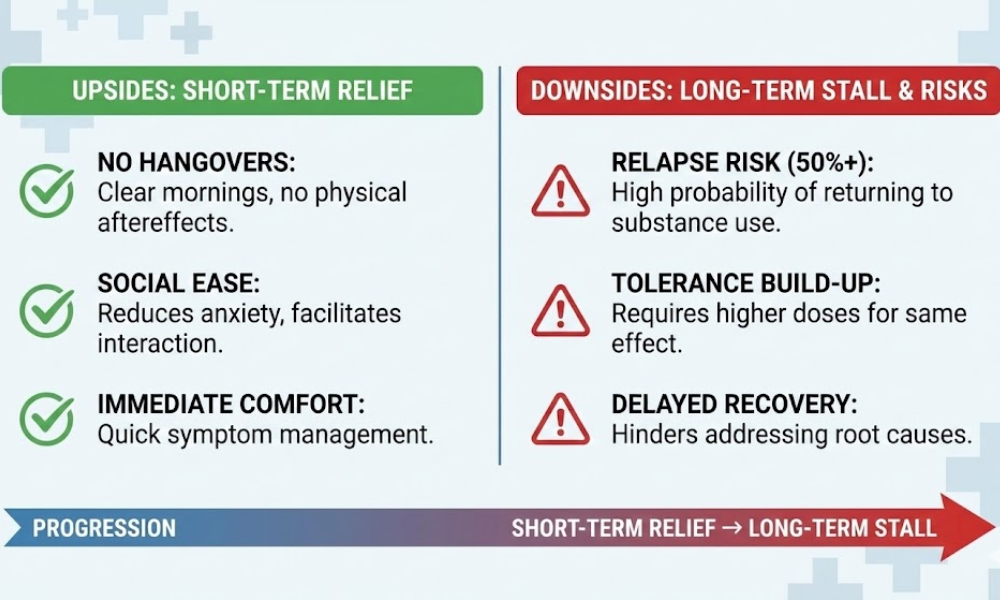
This approach offers clear short-term upsides for some – fewer alcohol-related harms like hangovers, liver strain, and blackouts—while letting people stay socially active without total isolation. But it introduces its own risks, often stalling deeper recovery work and maintaining a substance-centered identity.

As the Wall Street Journal noted in their coverage of the trend, “California sober” appeals because it feels realistic: ditching booze but keeping cannabis as a “safer” unwind tool (https://www.wsj.com/articles/california-sober-the-new-sober-11612345678). That harm reduction can buy time and reduce immediate damage, especially for those not in full-blown addiction. The downside? Cannabis tolerance builds quickly, leading to higher use over time, plus potential mental fog, dependency, and the slippery slope back to alcohol when weed stops delivering.

Here’s how it breaks down:

AspectPotential UpsideKey Downside
Physical HealthLess liver damage, fewer hangoversCannabis lung/heart strain, appetite issues
Mental HealthShort-term anxiety relief from alcoholParanoia, amotivation, stalled emotional growth
Social LifeEasier “no thanks” to drinksStill orbiting drug culture, not fully free
Long-term RecoveryFeels like progress initiallyHigh relapse risk (50%+ vs. abstinence paths)

If you’re weighing whether the trade-offs work for you, a structured path beyond substitution often delivers better clarity and stability long-term.

California sober pros and cons comparison chart 2026

Is Cali sober right for your personal recovery goals?

Not if you’ve experienced loss of control with alcohol, failed moderation attempts, or patterns of escalating use with any substance. This approach works best as a short-term experiment for those without addiction history, but for deeper dependence, it often delays the real work of breaking compulsive cycles.

Ask yourself these questions honestly:

  • Have you hidden your drinking or cannabis use from family or colleagues?
  • Do you need substances to unwind, sleep, or handle social anxiety?
  • Have you tried—and failed—to set firm limits on alcohol or weed multiple times?
  • Does “just one more” turn into a pattern, even with your “safer” choice?
  • Are you using to numb emotions rather than face them?
  • Has your substance of choice started affecting work, relationships, or health?

If three or more resonate, you’re likely beyond harm reduction territory. The good news: recognizing this is the first step toward a structured path that actually rewires those patterns without shame or isolation.

A complete home-based recovery program can meet you exactly where you are and guide the transition at your pace: https://www.liverehab.com/product.

How does California sober compare with full sobriety and guided home recovery?

Each path has different rules, support, and outcomes. Here’s how they stack up:

PathSubstance RulesSupport LevelShort-term ExperienceLong-term Outcomes
California soberNo alcohol, cannabis/psychedelics OKSelf-guidedSome relief from booze harms, but ongoing fogHigher relapse risk, stalled growth
White-knuckle abstinenceNo substances at allMinimal/noneIntense cravings, isolationOften unsustainable without structure
Guided home recoveryFull abstinence, medical detox + therapyStructured digital program + communitySupported detox, steady progressProven for lasting change at home

The third option stands out for professionals needing privacy and results without disruption. It combines medical detox protocols (timelines, meds, monitoring) with behavioral tools that address root causes – far beyond swapping one substance for another.

Man working from home during structured alcohol recovery program

Explore the full home recovery program here: https://www.liverehab.com/product

How can you move from California sober to a more stable recovery?

Start by clarifying your “why” beyond just alcohol: journal what full freedom would unlock in your work, relationships, sleep, and energy. Then set a 30-90 day cannabis-free experiment or taper, replace with non-substance coping (sleep hygiene, anxiety tools, social planning), and build accountability through a partner or structured program.

Here’s a simple sequence that works:

  • Day 1-7: Track triggers and set your quit/taper date – no more “last night.”
  • Week 2-4: Learn replacement skills (breathwork, movement, boundary-setting).
  • Month 2+: Address PAWS symptoms like cravings and mood swings with proven tools.
  • Ongoing: Weekly check-ins to stay on track without isolation.

This isn’t white-knuckling; it’s a deliberate transition that breaks dependence cycles safely. Compare all home recovery options and pricing to find your fit: https://www.liverehab.com/pricing

Woman marking alcohol-free milestone at home with journal

Built for High-Performing Professionals

Liverehab’s Alcohol Recovery Home Detox is specifically designed for executives and professionals who need a structured, medically-supervised detox that fits around real work demands – not the other way around.

Start Your Home Detox Plan
Privacy guaranteed. Continue working. Proven Sobriety Success protocol.

When should you seek professional help instead of relying on California sober?

Seek help if you’re experiencing withdrawal symptoms from alcohol (shakes, anxiety, insomnia), daily cannabis dependence, failed cutback attempts, mental health crashes, or fallout in relationships/work. These are non-negotiable red flags signaling your brain needs structured support, not more self-experimentation.

Clear thresholds include:

  • Needing substances daily to function or cope
  • Hiding use or breaking your own rules repeatedly
  • Withdrawal hitting when you try to pause (even cannabis)
  • Cravings overriding work, family, or health priorities
  • Co-occurring depression, anxiety, or paranoia worsening

Online home-based recovery delivers this discreetly – no clinics, no stigma.

FAQs about Cali sober and recovery

Is Cali sober considered sober in traditional recovery programs like AA?

No – AA and most clinical programs define sobriety as complete abstinence from all mind-altering substances, including cannabis. Substitution keeps dependence pathways active and often leads to exclusion from meetings.

Can California sober be a safe harm-reduction step for some people?

Possibly for those without addiction history seeking alcohol reduction, but not for substance use disorder. Cross-addiction risks and relapse rates (50%+) make it unreliable long-term.

Does using cannabis in recovery always lead to relapse?

Not always, but data shows significantly higher relapse to alcohol/other drugs vs. full abstinence paths. It maintains reward-seeking behavior, complicating brain rewiring.

How long should you try Cali sober before deciding it’s not working?

Give it 30-90 days max with strict tracking. If dependence patterns emerge (daily need, tolerance, failed cutbacks), pivot to structured recovery to avoid escalation.

Can I start a home recovery program if I’m still using cannabis?

Yes – programs like Live Rehab meet you where you are with tapering guidance, medical detox protocols, and transition support. No judgment, just a clear path forward.

What’s the safest way to quit alcohol completely from home?

Low-moderate risk cases use supervised detox protocols with online programs and escalation plans. High-risk needs inpatient and medication assessments first.

If California sober feels more like a stall than freedom, you’ve got options that deliver real clarity without disruption. Start with our home recovery packages: https://www.liverehab.com/product

Filed Under: Blog, General Tagged With: addiction recovery, Alcohol-Free Lifestyle, Cali Sober, Holistic Recovery, mental health, Mindful Drinking, Modern Sobriety, Sober Curious, Substance Use Alternatives

Empowering Your Recovery Journey: Achieve Sobriety from the Comfort of Home with Live Rehab

Last Modified: January 21, 2025 | Originally created on January 21, 2025 By Denise

Embarking on the journey to sobriety is a commendable and transformative decision. At Live Rehab, we understand that traditional rehabilitation methods may not suit everyone’s lifestyle or commitments. That’s why we offer a comprehensive, home-based recovery program designed to help you overcome addiction without leaving the comfort of your environment.

Why Choose Home-Based Recovery?

Opting for a home-based recovery approach allows you to maintain your daily responsibilities, whether they involve family, work, or personal interests. It eliminates the need to disrupt your life by attending in-person rehab sessions, providing flexibility and convenience. Moreover, recovering in a familiar setting can enhance comfort and reduce anxiety, fostering a more conducive environment for healing.

Live Rehab’s Comprehensive Programs

Our Sobriety Success platform offers over 23 self-paced courses, encompassing more than 120 lectures and 20 hours of live video content. These courses cover a wide range of topics, including:

  • Alcohol Addiction Recovery: Strategies to help you stop drinking and achieve sobriety from home.
  • Opioid Addiction Recovery: Guidance on breaking free from opioid dependence.
  • Behavioral Addictions: Support for overcoming addictions such as video gaming, social media, and pornography.
  • Holistic Well-being: Courses on nutrition, sleep, fitness, and spirituality to support your overall recovery journey.

Each course is designed to provide you with the tools and knowledge necessary to tackle addiction head-on, promoting long-term sobriety.

Personalized Support and Community

We believe that recovery is a unique journey for each individual. To cater to your specific needs, we offer personalized recovery plans that consider your emotional, physical, psychological, and environmental health. By completing a detailed assessment, we can tailor a plan that aligns with your lifestyle and goals.

Additionally, our platform includes monthly mastermind sessions and an “Ask Live Rehab” feature, allowing you to dive deeper into specific topics and seek answers to your questions. Engaging with a community of like-minded individuals can provide the support and motivation needed to stay on track.

Success Stories

Many individuals have found success through our programs. For instance, Steven B., a student, shared, “This course really helps in breaking free from your addiction. The instructor laid out clear steps to help you achieve those.” Such testimonials highlight the effectiveness of our approach and the positive impact it has on our students’ lives.

Take the First Step Today

Choosing to pursue recovery from home is a powerful step towards reclaiming your life. With Live Rehab’s comprehensive programs, personalized support, and flexible learning environment, you have the resources at your fingertips to achieve lasting sobriety. Embrace the opportunity to transform your life—start your journey with Live Rehab today.

Filed Under: Blog, General, Top

  • 1
  • 2
  • 3
  • …
  • 9
  • Next Page »

Popular Posts

Empowering Your Recovery Journey: Achieve Sobriety from the Comfort of Home with Live Rehab

Alcohol or Substance Abuse in the Workplace

Living Intentionally in Addiction and Recovery

Spirituality in Recovery

Co-Occurring Disorders (Dual Diagnosis) and why you need treatment for your mental health and addiction at the same time

What our Students Say

“I’m very much enjoying this course. The instructor is clear, concise, motivating, and knowledgeable.”
☆☆☆☆☆
~ Marla, Udemy Student

“The instructor is highly trained to be providing this course to those who are chemically dependent. The content of the lectures is comprehensive and very informative.”
☆☆☆☆☆
~ Matt, Udemy Student

Recent Posts

Vitamins and Nutrition for Alcohol Detox: What Your Body Really Needs

December 21, 2025 By Denise

When you stop drinking, your body is not just … [Read More...]

Benzodiazepines for Alcohol Withdrawal: The Gold Standard Treatment

December 18, 2025 By Denise

Benzodiazepines for Alcohol Withdrawal: The Gold … [Read More...]

Can You Work During Alcohol Detox? (Safe Home Guide)

December 11, 2025 By Denise

You can work during alcohol detox in some … [Read More...]

Tweets by @live_rehab

Tweets by live_rehab

Connect on Facebook

Live Rehab

Favorite Pins

Sobriety on your terms

We understand that traditional rehab may not be a realistic choice for you. If you’re feeling bad about destroying relationships, clouded decision making and being addicted, Live Rehab will guide you in helping you break free.

We’ve helped hundreds of people get sober from home.

Our students are:

– Happy
– Sober
– Clear Headed
– Free from the chains of addiction
– Motivated
– Energetic

Connect with Us

  • Facebook
  • Instagram
  • Pinterest
  • Twitter

Product

Recovery & Sobriety Courses

Pricing

Learn

Comprehensive Alcohol Detox and Recovery Guide (2026)

Blog

Resources

Company

About Us

Contact

Copyright © 2026 Live Rehab