Live Rehab

  • All-Access Pass
  • Product
  • Programs
    • Alcohol Freedom
  • Articles
    • Alcohol Detox & Recovery: The Complete Guide (2026)
  • Login
  • Get Started Now

Can You Work During Alcohol Detox? (Safe Home Guide)

Originally created on December 11, 2025 By Denise Leave a Comment

You can work during alcohol detox in some situations, but only if the detox is intentionally designed around safety, structure, and your professional life – never by “winging it” or trying to hide severe withdrawal from colleagues. The goal of this article is to show when it’s realistic to keep working, when it isn’t, and how a structured home detox (like Sobriety Success and the LiveRehab program) can make detox and work compatible for many high-performing people.


Can You Work During Alcohol Detox?

Many professionals delay getting help because they believe detox means disappearing into a clinic for weeks and risking their career. In reality, alcohol detox typically lasts 3 – 7 days and can often be done safely at home with a clear protocol, especially for people with low-to-moderate medical risk and a strong desire to maintain work continuity. The key is not whether you detox at home, but how you do it: following a structured plan, timing the process correctly, and being honest about your risk level.

A home-based detox using a step-by-step framework like Sobriety Success offers a realistic path: you stay in control of your schedule, you stay in your own environment, and you follow a designed process rather than hoping things don’t get out of hand. For many, that’s the only approach that feels compatible with a demanding job and real-world responsibilities.


What Alcohol Detox Actually Involves

Alcohol detox is the process of letting your body clear alcohol and re-balance chemically after a period of regular or heavy drinking. This is when withdrawal symptoms appear – anything from mild anxiety and poor sleep to sweats, tremors, nausea, and, in a smaller subset of people, serious complications like seizures or delirium tremens. The most intense symptoms usually appear in the first 48–72 hours, then begin to ease, but the exact pattern depends on how heavily and how long you’ve been drinking.

Detox is not the entire recovery process; it’s the first stage. After detox, people still need to address cravings, habits, triggers, and emotional patterns. But in the detox window itself, the priority is safety and stability: managing symptoms, staying hydrated, eating properly, and having clear ground rules for what to do if things get worse instead of better. That’s why having a plan matters far more than the location.

For a complete hour-by-hour breakdown, see our Alcohol Withdrawal Timeline in the Alcohol Detox & Recovery Guide.


When It’s Not Safe to Work During Detox

There are specific scenarios where trying to maintain work – especially office work, driving, or any safety-critical role – during detox is a bad idea. If you fit any of the following, you should treat detox as a medical event that requires you to step back from professional duties for a few days:

  • History of withdrawal seizures, delirium tremens, or needing emergency care when you last stopped drinking.
  • Very heavy, daily intake over many years (for example, drinking from morning into the evening most days).
  • Significant heart, liver, or neurological problems that could be worsened by withdrawal stress.
  • Serious mental health symptoms such as suicidal thoughts, severe anxiety attacks, or psychosis.
  • No safe, stable home environment – chaotic living situation, no private space, or no one to contact if things deteriorate.

In these cases, the risk of complications is high enough that work should not be your priority during detox. You may still use a home-based protocol later in your journey – but the very first detox attempt should be approached with maximum safety. Pushing through emails, meetings, or driving to work while your body is in crisis is not courage; it’s unnecessary risk.

For full details on seizure/DTs risks, read the Critical Medical Risks section of our complete guide.


When You May Be Able to Work During Detox

On the other hand, many people fall into a low-to-moderate risk category where a structured home detox is absolutely realistic – and in some cases preferable – especially if they:

  • Drink regularly and heavily, but not at the extreme end (for example, evenings only, with no prior seizures or hallucinations).
  • Have no history of severe withdrawals, no major medical red flags, and are otherwise generally well.
  • Have a reasonably calm, supportive home environment where they can rest between work blocks.
  • Are willing to adjust their workload and expectations for a few days instead of pretending everything is “normal.”

For these people, the question isn’t “Can I work during detox?” but “How do I intelligently reduce and structure my work so detox and safety always come first?” A well-designed home protocol recognises that you may still answer emails, attend lower-stakes meetings, or continue remote work – but also that you’ll build in buffers, rest, and contingency plans so you’re not carrying the same load you normally would.


How a Structured Home Detox Can Fit Around Work

Professional working remotely from home during safe structured alcohol detox

A structured home detox, like the approach laid out in Sobriety Success and Liverehab’s home programmes, is built for exactly this: making detox achievable without blowing up your career. The structure matters:

  • Clear start date and planning: You don’t just “decide” to detox on a random Monday. You choose your start window, clear or reduce important commitments, and plan meals, hydration, and rest ahead of time.
  • Staged days with expected symptom windows: You know which days are likely to be roughest (often days 2–3), and you plan those as your lowest-demand work days—more asynchronous work, fewer live calls.
  • Built-in check-ins: You schedule times to log symptoms, gauge how you’re doing, and decide whether to ease back or continue.
  • Boundary rules: You decide in advance what you won’t do on detox days—like driving long distances, making high-stakes presentations, or working late into the night.

Instead of trying to power through a full schedule, the home detox is designed around your work life: you maintain essential responsibilities while deliberately creating space for your body and brain to stabilise. That’s the difference between a serious home protocol and a DIY white-knuckle attempt.

Built for High-Performing Professionals

Liverehab’s Alcohol Recovery Home Detox is specifically designed for executives and professionals who need a structured, medically-supervised detox that fits around real work demands – not the other way around.

Start Your Home Detox Plan
Privacy guaranteed. Continue working. Proven Sobriety Success protocol.

Practical Tips If You Plan to Work While Detoxing

If you’re a good candidate for home detox and are planning to work during it, treat this like a project that needs a realistic schedule, not wishful thinking. A few practical adjustments make a huge difference:

  • Front-load and back-load important tasks. Shift high-impact work either before your detox start date or into the week after, so days 2–3 of detox are reserved for lighter tasks.
  • Use remote work where possible. Working from home gives you control over your environment, reduces the stress of commuting, and allows you to take quick breaks as needed.
  • Block your calendar. Put calendar holds for “focus blocks” and “recovery breaks” so people don’t book over them. Keep meetings shorter and spaced out.
  • Tell one trusted person. You don’t need to disclose everything to everyone, but letting a trusted colleague or manager know you’re dealing with a health issue helps explain why you might be quieter or less available for a few days.
  • Prioritise basics. Eat simple, nourishing food, drink plenty of water, and avoid extra caffeine and sugar that can spike anxiety and worsen sleep.

Executive on video call while completing safe home alcohol detox protocol

These are the details a structured approach should walk you through. A good protocol gives you “here’s what to expect on day X” and “here’s how to structure your day so detox and work don’t conflict.”


Do You Need Time Off After Detox?

Even if you manage to work through all or most of your detox, it’s smart to assume you will not feel completely “normal” the moment acute symptoms pass. Many people experience what’s known as Post-Acute Withdrawal Syndrome (PAWS), which can include fatigue, poor focus, mood swings, and sleep issues for weeks or months after detox.

That doesn’t mean you can’t work; it means you should:

  • Avoid scheduling the most critical projects or promotions immediately after detox.
  • Give yourself a ramp-up period where you gradually take on more responsibility.
  • Use routines, exercise, and ongoing support to stabilise your energy and mood.

How to Decide If Working During Detox Is Right for You

There isn’t a single answer that fits everyone. Instead, use this simple decision frame:

  • If you’ve had severe withdrawals before, have serious medical conditions, or drink extremely heavily: Treat detox like a medical event. Work should pause, at least for the first few days, and you should seek direct medical input before attempting any home-based plan.
  • If your pattern is heavy but not extreme, with no severe past withdrawals and you’re otherwise healthy: A structured home detox that explicitly accounts for your work schedule is often a safe and realistic option. You’ll still need to adjust your workload and follow a clear protocol, not improvise.
  • If you’re somewhere in between: Get assessed. A brief conversation or assessment can help confirm whether you’re in the “safe at home with structure” category or whether more support is needed.

The real danger isn’t detoxing at home; it’s detoxing at home without a plan. A framework like Sobriety Success, combined with a tailored home detox programme, gives you the roadmap to balance safety, privacy, and professional life instead of choosing between your health and your career.

Find out if you’re a good fit for a structured home detox you can complete while working – learn more about our Alcohol Recovery Home Detox programme.

FAQ: Working During Alcohol Detox


Is it safe to go to the office during alcohol detox?

No. Office work, commuting, and driving are unsafe during detox due to seizure risk and impaired judgment. Remote work with a structured home protocol is safer for low-moderate risk individuals.

Can I drive while detoxing from alcohol?

Absolutely not. Withdrawal impairs coordination, reaction time, and decision-making. Even mild symptoms make driving dangerous. Plan transportation or work remotely.

How many days of work should I plan to miss?

Most need to reduce workload for 3-5 days. Days 2-3 are typically peak symptoms. Structured home detox allows lighter remote work, but full intensity should wait until day 5+.

What if symptoms get worse while working?

Stop immediately. Have a pre-planned emergency contact and medical escalation protocol. Never “tough it out” during detox – safety first.

Sources

  1. Alcohol Withdrawal Syndrome – StatPearls – NCBI Bookshelf
  2. Alcohol Withdrawal Symptoms, Detox Timeline – American Addiction Centers
  3. Alcohol Withdrawal Timeline – The Recovery Village
  4. Alcohol Withdrawal: Symptoms & Treatment – Cleveland Clinic
  5. Home Detox Safety Protocols – RehabsUK
  6. Medications for Alcohol Withdrawal – AAFP
  7. Relapse Prevention After Detox – Abbington House

Last Modified: December 11, 2025 Filed Under: Blog

Alcohol Detox vs Rehab: Key Differences Explained

Originally created on December 9, 2025 By Denise Leave a Comment

Alcohol detox vs rehab is one of the most misunderstood distinctions in recovery, but it’s critical for both safety and long‑term success. Detox focuses on getting alcohol safely out of your system and stabilising your body, while rehab focuses on changing the thoughts, behaviours, and patterns that drive drinking in the first place.


What Is Alcohol Detox?

Alcohol detox is the short, medically focused process of helping your body safely withdraw from alcohol. It usually lasts between 3 and 7 days, depending on how much and how long you have been drinking, your overall health, and whether you’ve had complicated withdrawals before (like seizures or delirium tremens).

Professional completing safe home alcohol detox

During detox, the primary goals are:

  • Stabilise vital signs (heart rate, blood pressure, temperature).
  • Manage withdrawal symptoms (anxiety, tremors, sweating, nausea, insomnia).
  • Prevent life‑threatening complications like seizures and delirium tremens with medication and monitoring.

Detox is about safety and medical stabilisation, not about learning coping skills or processing trauma. Once detox is complete, you may be physically alcohol‑free but still very vulnerable to relapse if nothing else changes in your life.

For a full breakdown of the withdrawal stages, see our Alcohol Withdrawal Timeline section in the Alcohol Detox & Recovery Guide.


What Is Alcohol Rehab?

Alcohol rehab is the longer‑term treatment phase that follows – or sometimes overlaps with – detox. Where detox deals with the body, rehab deals with the mind, behaviour, and environment.

Rehab typically includes:

  • Individual therapy (often CBT or motivational interviewing) to address thinking patterns, triggers, and past experiences.
  • Group therapy for peer support, accountability, and skills practice.
  • Education about addiction, relapse patterns, and healthy coping strategies.
  • Family involvement where appropriate, to repair relationships and build a supportive environment.
  • Aftercare planning to ensure continued support once the formal programme ends.

Rehab can be delivered as:

  • Inpatient rehab: You live at the facility for 28 – 90+ days.
  • Outpatient rehab: You live at home and attend scheduled sessions each week.
  • Virtual / online rehab: Therapy and groups delivered remotely.

Rehab answers the question: “How do I live alcohol‑free in the real world?” Detox alone cannot do that.

For more on long‑term recovery strategies after detox, see the Recovery After Detox section of our Alcohol Detox & Recovery Guide.


Alcohol Detox vs Rehab: Side‑by‑Side Comparison

Although both are essential parts of treating alcohol use disorder for many people, they serve different purposes:

AspectAlcohol DetoxAlcohol Rehab
Primary goalSafely manage withdrawal and stabilise the bodyChange behaviour, thinking, habits, and lifestyle
Duration~3–7 days (sometimes up to 10)~4–12+ weeks (can extend to months with aftercare)
FocusMedical management, safety, symptom controlTherapy, skills, relapse prevention, support
SettingHospital, detox unit, or supervised home detoxInpatient, outpatient, or online programmes
MedicationsBenzodiazepines, thiamine, symptom‑targeted medsAnti‑craving meds, antidepressants, anxiety meds as needed
OutcomePhysically alcohol‑free, medically stableTools and support for long‑term sobriety

When people search for alcohol detox vs rehab, they’re often trying to understand which one they “need.” In reality, most people with true physical dependence benefit from both, sequenced in the right order.


Do You Need Detox, Rehab, or Both?

The right path depends on your relationship with alcohol and your current risk level.

You likely need detox first if:

  • You drink daily or nearly daily.
  • You experience shakes, sweating, or anxiety if you don’t drink.
  • You’ve ever had withdrawal symptoms when cutting down.
  • You’ve had seizures, hallucinations, or very high blood pressure when stopping.

You likely need rehab and structured aftercare if:

  • Alcohol has repeatedly caused problems in your work, relationships, health, or finances.
  • You’ve tried to quit before but always return to drinking.
  • You drink to cope with stress, trauma, anxiety, or depression.
  • Your life revolves around alcohol in some way.

For many people with alcohol dependence, the safest and most effective route is:

  1. Detox – safely clear alcohol and stabilise the body.
  2. Rehab – address the root causes and build relapse‑prevention skills.
  3. Aftercare – ongoing support, coaching, groups, and medical follow‑up.

Not sure where you fit? Our Alcohol Detox & Recovery Guide includes a decision framework to help you understand your risk profile and next steps.


Where Does Home‑Based Detox Fit In?

Home‑based detox is not a replacement for rehab; it is an alternative way of completing the detox phase for people who meet safety criteria.

A structured home alcohol detox programme can:

  • Replace inpatient detox for lower‑risk, high‑functioning individuals who are medically suitable.
  • Provide medical assessment, prescription medications, and monitoring remotely.
  • Allow professionals to maintain work and family responsibilities while completing detox.
  • Transition seamlessly into ongoing recovery support without a disruptive inpatient stay.

Home detox is generally not appropriate if you:

  • Have a history of withdrawal seizures or delirium tremens.
  • Have major medical conditions (serious heart, liver, or neurological disease) that require hospital monitoring.
  • Lack a safe, stable home environment or a reliable support person.

Liverehab’s Functional Recovery Protocol positions home detox as the detox step for people who want privacy and continuity of their professional lives, followed by structured recovery and aftercare.

Learn more about our Alcohol Recovery Home Detox programme.


Cost, Time, and Privacy Considerations

When deciding between alcohol detox vs rehab – and which format – most people weigh three practical factors: cost, time, and privacy.

Inpatient detox + inpatient rehab

  • Highest cost and most disruption.
  • Maximum structure and supervision.
  • Best fit for high‑risk or complex medical/psychiatric cases.

Outpatient detox + outpatient rehab

  • Moderate cost and disruption.
  • Requires reliable transport and strong home support.
  • Suitable for milder withdrawal and stable home environments.

Home‑based detox + online/remote rehab / aftercare

  • Lower disruption; you can often continue working.
  • Highly private, with no visible “check‑in” to a facility.
  • Ideal for professionals who value discretion and autonomy but still want medical and therapeutic structure.

See how our home detox and remote recovery options can be tailored around your work and family life.

Online therapy session during alcohol rehab aftercare program

How to Decide Your Next Step

A simple way to approach the alcohol detox vs rehab decision:

  1. Start with safety.
    If you are at risk of dangerous withdrawal (heavy daily use, past seizures, serious health issues), you need medical detox – whether inpatient or structured home‑based.
  2. Plan for life after detox.
    If alcohol has been more than an occasional bad habit, detox alone is unlikely to keep you sober. Rehab or structured recovery work is almost always necessary.
  3. Match the setting to your life.
  • High‑risk + unstable environment → inpatient detox and possibly inpatient rehab.
  • Moderate risk + supportive home + strong privacy needs → supervised home detox plus remote rehab / aftercare.

Not sure whether you need detox, rehab, or both?
Start with a brief professional assessment to understand your risk level and options.


Read the full Alcohol Detox & Recovery Guide for a deeper breakdown of your options.


FAQ: Alcohol Detox vs Rehab

Can I just do detox without rehab?

You can, but it’s rarely recommended. Detox gets you physically stable, but without rehab or structured aftercare, most people return to old patterns and relapse. Detox is step one, not the full journey.

Is rehab possible without detox?

If you don’t have physical dependence (no significant withdrawal when you stop), you may be able to go straight into therapy and rehab‑style work. Many people with heavy or long‑term use, however, do need detox first for safety.

Is home detox as safe as inpatient detox?

For carefully screened, lower‑risk individuals with oversight and clear emergency plans, supervised home detox can be a safe alternative. For anyone with a high‑risk profile, inpatient settings are safer and more appropriate. Feel free to reach out and ask us what’s right for you!

How long after detox should I start rehab?

Ideally, rehab or structured recovery work should begin immediately after detox, and sometimes overlaps. The first 30 – 90 days post‑detox are the highest risk for relapse, so delays increase the chances of returning to alcohol.


Sources

  1. Alcohol Withdrawal Syndrome – StatPearls – NCBI Bookshelf
  2. Alcohol Withdrawal Symptoms, Detox Timeline – American Addiction Centers
  3. Alcohol Withdrawal Timeline – The Recovery Village
  4. Alcohol Withdrawal: Symptoms & Treatment – Cleveland Clinic
  5. Medications for Alcohol Use Disorder – AAFP
  6. Inpatient vs Outpatient Alcohol Detox – Rehab4Addiction
  7. Alcohol Detox at Home vs Rehab – RehabsUK
  8. Alcohol Rehab Success Rates – Abbington House
  9. Alcohol Relapse Rates & Statistics – The Recovery Village

Last Modified: December 9, 2025 Filed Under: Blog

Alcohol PAWS: Post-Acute Withdrawal Syndrome Symptoms & Management

Originally created on December 6, 2025 By Denise Leave a Comment

Alcohol PAWS symptoms – lingering anxiety, insomnia, mood swings, and brain fog—affect up to 25% of people after acute alcohol detox, often lasting weeks to months and driving most first-year relapses. Unlike the shaking, sweating, and nausea of early detox that resolve in 5-7 days, PAWS involves emotional instability, cognitive difficulties, and physical fatigue that can last weeks to months—making it the single biggest cause of relapse in the first year of sobriety.


What Exactly Is PAWS After Alcohol Detox?

When someone drinks heavily for months or years, their brain chemistry fundamentally changes. Alcohol artificially boosts inhibitory neurotransmitters (GABA) while suppressing excitatory ones (glutamate). During acute withdrawal, this creates dangerous hyperexcitability. But even after the worst physical symptoms subside, the brain continues recalibrating—often for months.

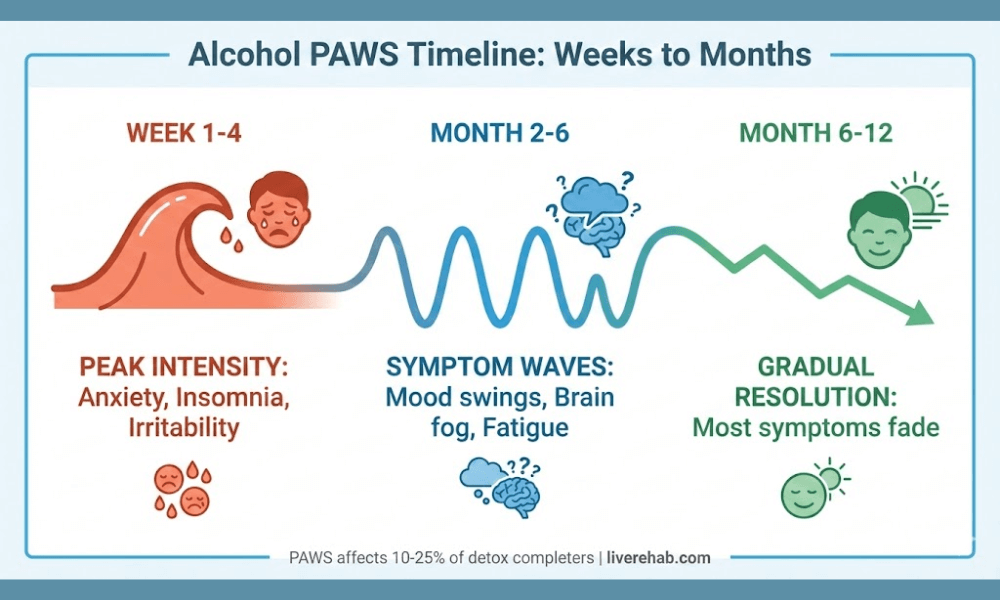
Clinical studies estimate 10-25% of detox completers experience clinically significant PAWS, with symptoms appearing in distinct “waves” rather than constant intensity. These waves create a false sense of security followed by sudden crashes, explaining why so many relapse despite early detox success.


PAWS Timeline & Symptom Waves

PAWS symptoms follow a characteristic waxing and waning pattern over time, often described by individuals experiencing alcohol PAWS symptoms as unpredictable waves of emotional and physical distress. Understanding this timeline is critical for managing expectations and maintaining commitment to recovery. During these fluctuating phases, individuals may feel periods of relative calm interrupted by sudden symptom flare-ups, which can challenge even the most resilient in recovery.

  • Weeks 1-4: Symptoms typically peak, with mood swings, anxiety, and sleep disturbances most severe.
  • Months 2-6: Symptoms occur in waves—periods of relative calm interrupted by transient flare-ups.
  • Months 6-12: Most people gradually see symptom reduction, though some experience mild effects up to a year after detox.[1]
Infographic showing alcohol PAWS symptom waves timeline from weeks 1-4 peak through months 6-12 resolution

See Alcohol Detox Timeline section 4 in our complete guide for more about symptom progression.


Common PAWS Symptoms

PAWS affects multiple systems simultaneously:

Emotional Symptoms:

  • Irritability and short fuse (even with loved ones)
  • Persistent anxiety or free-floating worry
  • Clinical depression or anhedonia (inability to feel pleasure)
  • Emotional numbness or inappropriate crying

Cognitive Symptoms:

  • Persistent “brain fog” and mental fatigue
  • Difficulty concentrating or making decisions
  • Short-term memory problems
  • Word-finding difficulties

Physical Symptoms:

  • Chronic insomnia or disrupted sleep architecture
  • Vivid, disturbing dreams or nightmares
  • Low energy despite adequate sleep
  • Heightened sensitivity to stress (physical symptoms from emotional triggers)

These aren’t just “feeling off” – they reflect measurable neurotransmitter imbalances that require targeted management.


Why PAWS Causes Relapse

PAWS symptoms arise because the brain’s inhibitory and excitatory systems remain out of balance long after physical detox. The “kindling effect,” where repeated detox cycles worsen brain sensitivity, amplifies this risk. Additionally, co-occurring mental health diagnoses – in 40 to 60% of cases – compound emotional distress, making relapse more likely without integrated care.

For an in-depth look at risk factors, see Section 6 of our Detox Guide.


How to Manage PAWS Safely

While tapering off alcohol may be part of early detox strategies done under medical supervision, PAWS management focuses more on holistic long-term care rather than substance tapering.

Here are evidence-based PAWS management strategies:

  1. Prioritize Sleep Hygiene – Maintain consistent sleep schedules, avoid stimulants, and create a restful bedroom environment.
  2. Optimize Nutrition – Balanced meals rich in vitamins, particularly B-complex and magnesium, support neurological healing.
  3. Engage in Cognitive Behavioral Therapy (CBT) – Structured therapy assists in reframing negative thoughts and managing anxiety/depression.
  4. Adopt Regular Exercise – Even 30 minutes daily improves mood, energy, and brain function.
  5. Use Medication-Assisted Treatment (MAT) – Medications like naltrexone help curb cravings and stabilize mood during recovery.
  6. Join Support Groups – Virtual or in-person groups provide accountability, reduce isolation, and share coping strategies.

Our aftercare packages combine these elements into a tailored program designed to prevent PAWS-related relapse. Learn more about our options.


When PAWS Becomes Dangerous

Post-Acute Withdrawal Syndrome (PAWS) symptoms are generally manageable with proper support, but alcohol PAWS symptoms can become dangerous and warrant immediate professional intervention when they escalate beyond typical fluctuations. Severe depression accompanied by suicidal thoughts, the onset of psychosis or intense anxiety attacks, or a marked inability to perform daily activities due to cognitive impairment signal critical red flags. At this stage, dual diagnosis treatment programs that integrate comprehensive addiction recovery with specialized mental health care offer significantly improved outcomes. Early recognition and intervention in these severe PAWS cases are essential to prevent relapse, reduce harm, and support long-term sobriety

See Section 8 of our Detox Guide for help deciding the right level of care.


FAQ: Quick Answers About PAWS

How long does PAWS last after detox?

Most experience symptoms for 1-6 months; some mild symptoms may persist up to 12 months.

Are PAWS symptoms dangerous?

Typically no, but severe mood or cognitive symptoms may require specialized care.

Can medications help PAWS?

Yes, especially MAT for cravings and antidepressants/anxiolytics when prescribed by professionals.

Sources
[1] Post-acute Withdrawal Syndrome (PAWS) https://www.brightoncenter.com/images/uploads/program_resources/Post-acute_Withdrawal_Syndrome_(PAWS).pdf
[2] Understanding Post Acute Withdrawal Syndrome https://phwellness.com/blog/recovery-resources/post-acute-withdrawal-syndrome/

Last Modified: December 8, 2025 Filed Under: Blog

Alcohol Withdrawal Seizures: Risk Factors, Warning Signs & Prevention

Originally created on December 4, 2025 By Denise Leave a Comment

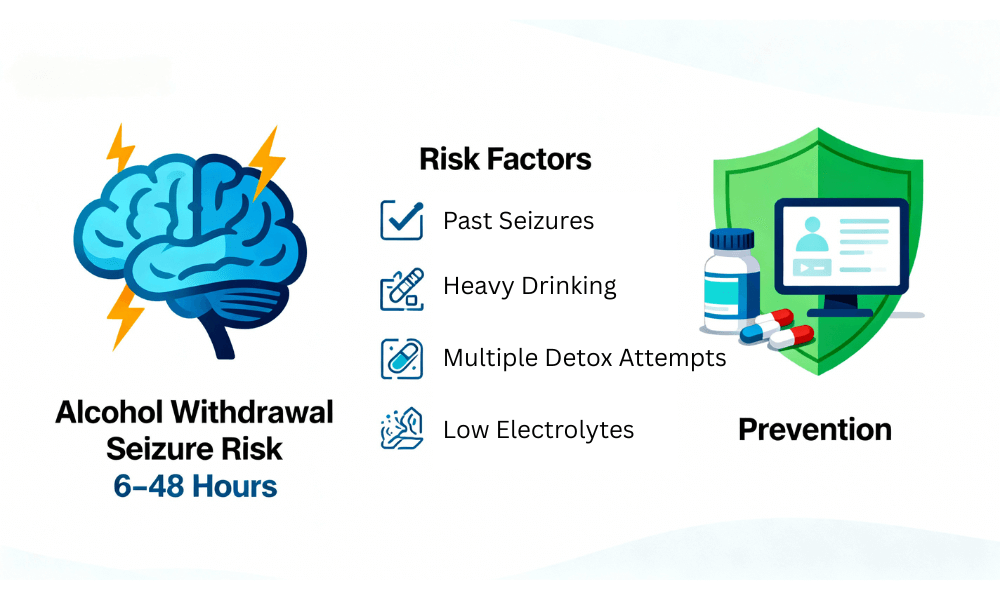
Alcohol withdrawal seizures are a serious medical complication affecting approximately 2-5% of people detoxing from alcohol, typically occurring 6-48 hours after the last drink. While not everyone will experience them, they are a critical reason why “cold turkey” detox can be dangerous. Understanding your personal risk factors is the first step in ensuring a safe recovery.


What Are Alcohol Withdrawal Seizures?

A withdrawal seizure medically known as a “rum fit” is usually a generalized tonic-clonic seizure. This means the person loses consciousness and experiences violent muscle contractions.

Unlike epilepsy, these seizures are directly caused by the brain’s sudden chemical rebound when alcohol is removed. Chronic heavy drinking suppresses the brain’s excitatory system; when alcohol stops, this system goes into overdrive (hyperexcitability), potentially triggering an electrical storm in the brain.

Most withdrawal seizures happen early in the timeline – often before other severe symptoms like delirium tremens (DTs) fully set in.

For a complete overview of what happens hour-by-hour, read our Alcohol Withdrawal Timeline Guide.


Key Risk Factors: Who Is Most Likely to Have a Seizure?

Infographic showing alcohol withdrawal seizure risk factors and prevention steps during detox

While any dependent drinker carries some risk, clinical data shows certain factors significantly increase the likelihood of a seizure:

  • History of Previous Withdrawal Seizures: This is the single biggest predictor. If you’ve had one before, the “kindling effect” means you are at very high risk of having another, often with less alcohol intake than before.
  • High Daily Alcohol Intake: Consuming large amounts daily over a long period creates deeper neuro-adaptation.
  • Concurrent Substance Use: Using or withdrawing from benzodiazepines or sedatives alongside alcohol amplifies risk.
  • Multiple Past Detox Attempts: Repeated cycles of detox and relapse sensitize the brain (kindling), making each subsequent withdrawal more severe.
  • Low Electrolyte Levels: Deficiencies in magnesium, potassium, and sodium—common in chronic drinkers—lower the seizure threshold.

Unsure if you fit the high-risk profile? Our Alcohol Detox Guide details medical risks and safety criteria.


Warning Signs to Watch For

Seizures can happen suddenly, sometimes without warning. However, they are often preceded by escalating withdrawal symptoms in the 6-24 hour window:

  • Severe, uncontrollable tremors (shakes)
  • Extreme agitation or anxiety
  • Hyper-reflexia (jumpiness)
  • Sensory disturbances (sensitivity to light/sound)
  • Insomnia despite exhaustion

Safety Note: If you experience these warning signs, do not attempt to tough it out. You need medical stabilization immediately.


Can You Prevent Withdrawal Seizures?

Yes. Withdrawal seizures are highly preventable with appropriate medical care.

1. Medical Detox Protocols (Benzodiazepines)

The gold standard for prevention is the use of long-acting benzodiazepines (like diazepam or chlordiazepoxide). These medications mimic alcohol’s calming effect on the brain, safely tapering the “excitability” down over several days.

2. Anti-Seizure Medications

In some cases, anticonvulsants like carbamazepine or gabapentin are used as adjuncts to manage risk without the sedation of benzodiazepines.

3. Nutrient Replenishment

Rapid replacement of Thiamine (Vitamin B1) and Magnesium helps stabilize the nervous system and protects the brain from permanent damage (Wernicke-Korsakoff Syndrome).

Liverehab’s Functional Recovery Protocol includes preventative prescription medications and daily monitoring to manage seizure risk safely from home.


Is Home Detox Safe for Seizure Risk?

Home detox is only safe if you are screened as low-to-moderate risk and have a structured medical plan in place.

You should NOT detox at home if:

  • You have a history of withdrawal seizures or epilepsy.
  • You have had Delirium Tremens (DTs) in the past.
  • You live alone or have no reliable support person.

For professionals with a lower risk profile, a medically supervised home detox is a safe alternative to inpatient rehab. It provides the necessary medication (benzodiazepines) and oversight (telehealth checks) to prevent complications while maintaining privacy.

Compare your options in our guide: Inpatient vs. Home Detox Safety.


What to Do If Someone Has a Seizure

If you are supporting someone who has a seizure during detox:

  1. Call 999/911 immediately. Withdrawal seizures are a medical emergency.
  2. Protect them from injury. Clear the area of hard or sharp objects.
  3. Do NOT restrain them or put anything in their mouth.
  4. Roll them onto their side (recovery position) once the seizing stops to keep the airway clear.
  5. Time the seizure. Information on duration helps paramedics.

Preventing Future Risk

The only 100% effective way to prevent alcohol withdrawal seizures is to stop the cycle of dependence safely and permanently. The “kindling effect” means that every relapse and subsequent detox increases your future seizure risk.

Completing a full, medically supported detox followed by structured aftercare is your best defense against long-term neurological damage.

Professional in modern home office during safe structured alcohol detox recovery

Take Action:
Don’t gamble with your brain health. If you are ready to stop drinking, get a professional risk assessment first.

Explore Our Safe Home Detox Packages


FAQ: Quick Answers on Seizures

How long after stopping drinking do seizures happen?

Most withdrawal seizures occur between 6 and 48 hours after the last drink. They rarely happen after 72 hours unless the detox is complicated by other factors.

Can I prevent a seizure by drinking a little bit (tapering)?

Self-tapering is notoriously difficult and often fails although it is not impossible. Medical tapering using benzodiazepines is safer, more consistent, and scientifically proven to prevent seizures.

Are “brain zaps” a sign of a seizure coming?

“Brain zaps” or sudden electric shock sensations are a common withdrawal symptom indicating nervous system instability. While not a seizure themselves, they are a warning sign that you need medical support.


Sources
[1] Alcohol Withdrawal Symptoms, Detox, Timeline, & Treatment https://americanaddictioncenters.org/alcohol/withdrawal-detox
[2] Alcohol Withdrawal: Symptoms, Treatment & Timeline https://my.clevelandclinic.org/health/diseases/alcohol-withdrawal
[3] Alcohol Withdrawal Timeline: What Symptoms to Expect in Days 1-5 https://www.therecoveryvillage.com/alcohol-abuse/how-long-alcohol-detox-take/
[4] Alcohol Withdrawal Timeline & Symptoms – What to Expect – Priory https://www.priorygroup.com/addiction-treatment/alcohol-rehab/alcohol-addiction-withdrawal
[5] Medications for Alcohol Use Disorder – AAFP https://www.aafp.org/pubs/afp/issues/2016/0315/p457.html

Last Modified: December 4, 2025 Filed Under: Blog

Alcohol Withdrawal Timeline: Hour-by-Hour Breakdown

Originally created on December 4, 2025 By Denise Leave a Comment

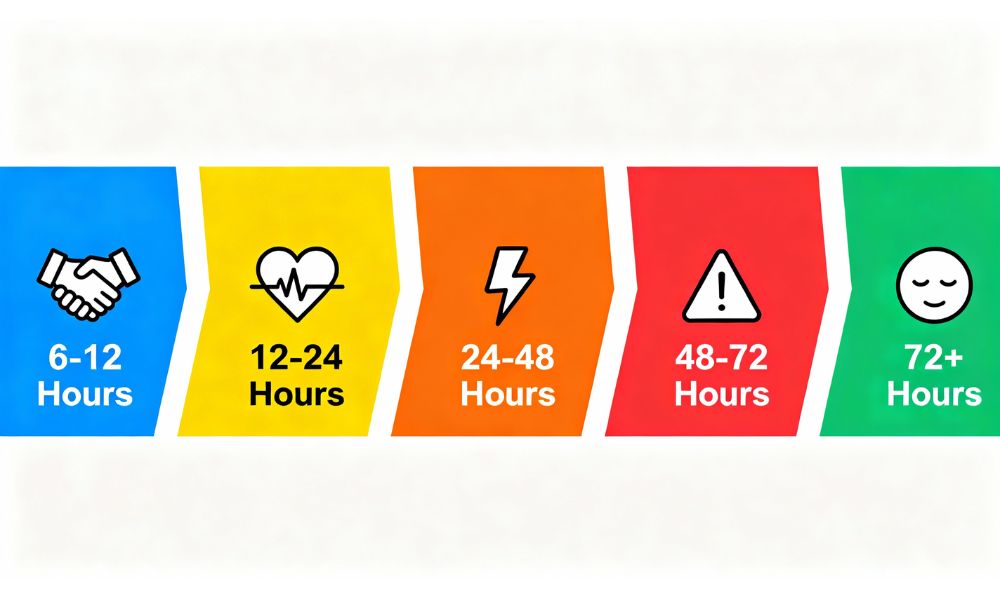
Alcohol withdrawal follows a predictable but highly individual timeline, usually starting 6–12 hours after your last drink, peaking around 48–72 hours, and easing over 5–7 days. The exact symptoms and risks depend on how much, how often, and how long you’ve been drinking, plus your overall health and previous detox history.


What Is Alcohol Withdrawal?

Alcohol withdrawal happens when a person who drinks heavily on a regular basis suddenly reduces or stops alcohol. Over time, the brain adapts to having alcohol present, increasing excitatory chemicals to compensate for alcohol’s sedating effects. When alcohol is removed, those excitatory chemicals surge unchecked, causing tremors, anxiety, sweating, and, in severe cases, seizures or delirium tremens (DTs).

Withdrawal is a medical condition, not a willpower issue. Mild cases may feel like an intense hangover; severe cases can be life-threatening without medical supervision. Understanding the timeline helps you recognize danger signs early and choose the right level of support.

In this guide, you’ll see how symptoms progress in the first 72 hours and beyond. For a full overview of detox options and safety, see our Alcohol Detox & Recovery: Complete Guide (2026).


Alcohol Withdrawal Timeline: Hour-by-Hour

Hour-by-hour alcohol withdrawal symptoms timeline from 6 hours to 72+ hours

6–12 Hours After Your Last Drink

This is when early withdrawal usually begins. Mild symptoms may start even while alcohol is still in your system.

Common symptoms include:

  • Anxiety or feeling “on edge”
  • Tremors or “the shakes,” especially in the hands
  • Headache, nausea, loss of appetite
  • Sweating, rapid pulse, trouble sleeping

For many people, this stage feels like a severe hangover, but it is the first sign that your nervous system has become dependent on alcohol. If you drink to relieve these symptoms, that’s a strong indicator of alcohol dependence.


12–24 Hours: Symptoms Escalate

As blood alcohol levels continue to fall, the brain’s overactivity becomes more pronounced.

You may experience:

  • Worsening tremors and anxiety
  • Irritability, restlessness, difficulty concentrating
  • Nausea, vomiting, stomach discomfort
  • Elevated heart rate and blood pressure

Some people develop alcoholic hallucinosis in this window—seeing, hearing, or feeling things that aren’t there while remaining otherwise alert and oriented. This is distinct from delirium tremens but still a warning sign that withdrawal is more than “just” a hangover.


24–48 Hours: Peak of Physical Discomfort

Between 24 and 48 hours, symptoms generally reach their peak for many people.

Potential symptoms:

  • More intense tremors and sweating
  • Pronounced anxiety, agitation, feeling unable to sit still
  • Difficulty sleeping despite exhaustion
  • Nausea, vomiting, diarrhea
  • Fluctuations in blood pressure and heart rate

Seizures most commonly occur in this period, particularly in those with long-term heavy use, a history of withdrawal seizures, or concurrent use of sedative medications. Anyone who has a seizure, loses consciousness, or develops chest pain in this window needs emergency medical care.

Learn more about seizure and delirium tremens risk during alcohol withdrawal.


48–72 Hours: Highest Risk Window (Delirium Tremens)

This phase is often where the most serious complications arise.

In a small but critical proportion of people, delirium tremens (DTs) can develop, characterised by:

  • Severe confusion and disorientation
  • Agitation, aggression, intense fear or paranoia
  • Fever, heavy sweating, racing heart
  • Vivid hallucinations and disturbed sleep-wake cycles

DTs usually start 48–72 hours after the last drink and can last several days. Untreated, mortality has historically been reported in the 5–25% range; with modern medical care, that risk drops significantly but remains serious. This is why people at moderate or high risk are typically advised to detox in a monitored setting rather than alone.


72 Hours and Beyond: Symptoms Ease, New Challenges Begin

By day 3–5, the most intense physical symptoms (shakes, sweating, nausea) usually begin to subside. However, that doesn’t mean recovery is “done.”

Lingering issues often include:

  • Insomnia or disrupted sleep
  • Fatigue and low energy
  • Irritability, anxiety, low mood
  • Poor concentration or “brain fog”
  • Ongoing cravings for alcohol

These lingering symptoms are sometimes referred to as Post-Acute Withdrawal Syndrome (PAWS) and can last for weeks or months, especially after years of heavy use. Without ongoing support, this is a high-risk period for relapse.

Read more: Alcohol PAWS – Post-Acute Withdrawal Symptoms Explained.


Factors That Can Change Your Timeline

Not everyone follows this exact pattern. Key factors that influence both timeline and severity include:

  • How much and how often you drink
  • How long you’ve been drinking heavily
  • Previous withdrawal episodes (kindling effect)
  • Age and general physical health
  • Liver function and nutritional status
  • Co-occurring mental health conditions

For example, someone drinking heavily every day for 10 years is far more likely to experience prolonged symptoms and complications than someone with a shorter history and lower intake.

For a deeper dive into risk factors and severity, see What Determines Your Detox Timeline & Severity?


Professional monitoring vital signs during safe home alcohol detox

When Is It Safe to Detox at Home?

Home detox can be appropriate for some people, but only under clear conditions and medical guidance. Generally, it may be considered if:

  • You drink at a moderate but regular level (not extreme daily intake)
  • You have no history of seizures or DTs
  • Vital signs and basic blood tests are stable
  • You have a safe, alcohol-free home environment
  • You have access to medical supervision (e.g., telehealth, scheduled check-ins)
  • There’s a clear plan for emergency escalation

If any of the following apply, you should not attempt unsupervised home detox:

  • Past withdrawal seizures or DTs
  • Serious heart, liver, or kidney disease
  • Pregnancy
  • Active suicidal thoughts or severe psychiatric symptoms
  • Lack of safe housing or reliable support

Not sure which category you’re in? Our Alcohol Detox & Recovery Guide explains inpatient, outpatient, and home-based options in detail.


How a Structured Home Detox Protocol Helps

A structured home detox protocol is very different from “going cold turkey” alone. Done correctly, it typically includes:

  • A pre-detox medical assessment (history, vitals, bloodwork)
  • A personalized plan for medications (e.g., benzodiazepines, thiamine)
  • Daily or twice-daily check-ins (video or phone) during the first 72 hours
  • Clear guidance on what to expect at each stage of the timeline
  • Red-flag criteria for immediate emergency care
  • Transition plan into ongoing therapy and support after day 5–7

This approach aims to flatten the curve of withdrawal – reducing peak symptoms, managing risk, and helping you remain functional enough to continue working or caring for family where safe.

Liverehab’s Functional Recovery Protocol is built specifically for high-performing individuals who need medically-informed home detox with minimal disruption. Learn more about our Alcohol Recovery Home Detox program.


When to Seek Emergency Help

Regardless of where you detox, seek urgent medical help if you or someone you’re supporting experiences:

  • Seizures or loss of consciousness
  • Chest pain, severe shortness of breath, or very irregular heartbeat
  • Confusion, disorientation, or inability to recognize people or place
  • Hallucinations plus agitation or high fever
  • Vomiting that prevents keeping down fluids or medications

These are not “toughing it out” moments; they are medical emergencies.


FAQ: Quick Answers About the Timeline

Can withdrawal start sooner than 6 hours?

Yes. In heavy daily drinkers, early symptoms can begin as soon as 4–6 hours after the last drink, especially if blood alcohol levels fall rapidly.

How long until I feel “back to normal”?

Most people feel physically much better by days 5–7, but mental clarity, mood, and sleep can take several weeks to stabilise. Structured aftercare speeds this up.

Does everyone get seizures or DTs?

No. Only a minority develop severe complications, but it is impossible to guarantee who will. Prior complicated withdrawal, heavy long-term use, and poor health all increase risk.


Sources
[1] Alcohol Withdrawal Symptoms, Detox, Timeline, & Treatment https://americanaddictioncenters.org/alcohol/withdrawal-detox
[2] Alcohol Withdrawal: Symptoms, Treatment & Timeline https://my.clevelandclinic.org/health/diseases/alcohol-withdrawal
[3] Alcohol Withdrawal Syndrome – StatPearls – NCBI Bookshelf – NIH https://www.ncbi.nlm.nih.gov/books/NBK441882/
[4] Alcohol Withdrawal Timeline: What Symptoms to Expect in Days 1-5 https://www.therecoveryvillage.com/alcohol-abuse/how-long-alcohol-detox-take/
[5] Alcohol Withdrawal Timeline & Symptoms – What to Expect – Priory https://www.priorygroup.com/addiction-treatment/alcohol-rehab/alcohol-addiction-withdrawal
[6] Alcohol Relapse Rates & Statistics – The Recovery Village https://www.therecoveryvillage.com/alcohol-abuse/alcohol-relapse-statistics/
[7] Alcohol Detox at Home vs Rehab: What’s the Difference? https://rehabsuk.com/blog/alcohol-detox-at-home-vs-rehab-what-s-the-difference/

Last Modified: December 6, 2025 Filed Under: Blog

  • 1
  • 2
  • 3
  • …
  • 25
  • Next Page »

Popular Posts

Empowering Your Recovery Journey: Achieve Sobriety from the Comfort of Home with Live Rehab

Alcohol or Substance Abuse in the Workplace

Living Intentionally in Addiction and Recovery

Spirituality in Recovery

Co-Occurring Disorders (Dual Diagnosis) and why you need treatment for your mental health and addiction at the same time

What our Students Say

“I’m very much enjoying this course. The instructor is clear, concise, motivating, and knowledgeable.”
☆☆☆☆☆
~ Marla, Udemy Student

“The instructor is highly trained to be providing this course to those who are chemically dependent. The content of the lectures is comprehensive and very informative.”
☆☆☆☆☆
~ Matt, Udemy Student

Recent Posts

Can You Work During Alcohol Detox? (Safe Home Guide)

December 11, 2025 By Denise

You can work during alcohol detox in some … [Read More...]

Alcohol Detox vs Rehab: Key Differences Explained

December 9, 2025 By Denise

Alcohol detox vs rehab is one of the most … [Read More...]

Alcohol PAWS: Post-Acute Withdrawal Syndrome Symptoms & Management

December 6, 2025 By Denise

Alcohol PAWS symptoms - lingering anxiety, … [Read More...]

Tweets by @live_rehab

Tweets by live_rehab

Connect on Facebook

Live Rehab

Favorite Pins

Sobriety on your terms

We understand that traditional rehab may not be a realistic choice for you. If you’re feeling bad about destroying relationships, clouded decision making and being addicted, Live Rehab will guide you in helping you break free.

We’ve helped hundreds of people get sober from home.

Our students are:

– Happy
– Sober
– Clear Headed
– Free from the chains of addiction
– Motivated
– Energetic

Connect with Us

  • Facebook
  • Instagram
  • Pinterest
  • Twitter

Product

Recovery & Sobriety Courses

Pricing

Learn

Comprehensive Alcohol Detox and Recovery Guide (2026)

Blog

Resources

Company

About Us

Contact

Copyright © 2025 Live Rehab