Live Rehab

  • All-Access Pass
  • Product
  • Programs
    • Alcohol Freedom
  • Articles
    • Alcohol Detox & Recovery: The Complete Guide (2026)
  • Login
  • Get Started Now

Alcohol Withdrawal Seizures: Risk Factors, Warning Signs & Prevention

Last Modified: December 4, 2025 | Originally created on December 4, 2025 By Denise

Alcohol withdrawal seizures are a serious medical complication affecting approximately 2-5% of people detoxing from alcohol, typically occurring 6-48 hours after the last drink. While not everyone will experience them, they are a critical reason why “cold turkey” detox can be dangerous. Understanding your personal risk factors is the first step in ensuring a safe recovery.


What Are Alcohol Withdrawal Seizures?

A withdrawal seizure medically known as a “rum fit” is usually a generalized tonic-clonic seizure. This means the person loses consciousness and experiences violent muscle contractions.

Unlike epilepsy, these seizures are directly caused by the brain’s sudden chemical rebound when alcohol is removed. Chronic heavy drinking suppresses the brain’s excitatory system; when alcohol stops, this system goes into overdrive (hyperexcitability), potentially triggering an electrical storm in the brain.

Most withdrawal seizures happen early in the timeline – often before other severe symptoms like delirium tremens (DTs) fully set in.

For a complete overview of what happens hour-by-hour, read our Alcohol Withdrawal Timeline Guide.


Key Risk Factors: Who Is Most Likely to Have a Seizure?

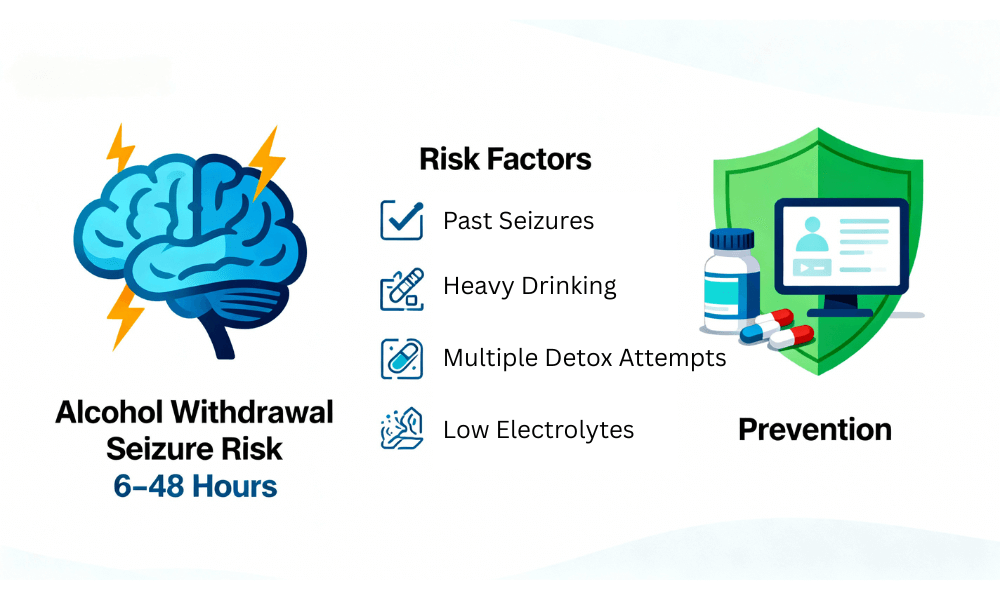
Infographic showing alcohol withdrawal seizure risk factors and prevention steps during detox

While any dependent drinker carries some risk, clinical data shows certain factors significantly increase the likelihood of a seizure:

  • History of Previous Withdrawal Seizures: This is the single biggest predictor. If you’ve had one before, the “kindling effect” means you are at very high risk of having another, often with less alcohol intake than before.
  • High Daily Alcohol Intake: Consuming large amounts daily over a long period creates deeper neuro-adaptation.
  • Concurrent Substance Use: Using or withdrawing from benzodiazepines or sedatives alongside alcohol amplifies risk.
  • Multiple Past Detox Attempts: Repeated cycles of detox and relapse sensitize the brain (kindling), making each subsequent withdrawal more severe.
  • Low Electrolyte Levels: Deficiencies in magnesium, potassium, and sodium—common in chronic drinkers—lower the seizure threshold.

Unsure if you fit the high-risk profile? Our Alcohol Detox Guide details medical risks and safety criteria.


Warning Signs to Watch For

Seizures can happen suddenly, sometimes without warning. However, they are often preceded by escalating withdrawal symptoms in the 6-24 hour window:

  • Severe, uncontrollable tremors (shakes)
  • Extreme agitation or anxiety
  • Hyper-reflexia (jumpiness)
  • Sensory disturbances (sensitivity to light/sound)
  • Insomnia despite exhaustion

Safety Note: If you experience these warning signs, do not attempt to tough it out. You need medical stabilization immediately.


Can You Prevent Withdrawal Seizures?

Yes. Withdrawal seizures are highly preventable with appropriate medical care.

1. Medical Detox Protocols (Benzodiazepines)

The gold standard for prevention is the use of long-acting benzodiazepines (like diazepam or chlordiazepoxide). These medications mimic alcohol’s calming effect on the brain, safely tapering the “excitability” down over several days.

2. Anti-Seizure Medications

In some cases, anticonvulsants like carbamazepine or gabapentin are used as adjuncts to manage risk without the sedation of benzodiazepines.

3. Nutrient Replenishment

Rapid replacement of Thiamine (Vitamin B1) and Magnesium helps stabilize the nervous system and protects the brain from permanent damage (Wernicke-Korsakoff Syndrome).

Liverehab’s Functional Recovery Protocol includes preventative prescription medications and daily monitoring to manage seizure risk safely from home.


Is Home Detox Safe for Seizure Risk?

Home detox is only safe if you are screened as low-to-moderate risk and have a structured medical plan in place.

You should NOT detox at home if:

  • You have a history of withdrawal seizures or epilepsy.
  • You have had Delirium Tremens (DTs) in the past.
  • You live alone or have no reliable support person.

For professionals with a lower risk profile, a medically supervised home detox is a safe alternative to inpatient rehab. It provides the necessary medication (benzodiazepines) and oversight (telehealth checks) to prevent complications while maintaining privacy.

Compare your options in our guide: Inpatient vs. Home Detox Safety.


What to Do If Someone Has a Seizure

If you are supporting someone who has a seizure during detox:

  1. Call 999/911 immediately. Withdrawal seizures are a medical emergency.
  2. Protect them from injury. Clear the area of hard or sharp objects.
  3. Do NOT restrain them or put anything in their mouth.
  4. Roll them onto their side (recovery position) once the seizing stops to keep the airway clear.
  5. Time the seizure. Information on duration helps paramedics.

Preventing Future Risk

The only 100% effective way to prevent alcohol withdrawal seizures is to stop the cycle of dependence safely and permanently. The “kindling effect” means that every relapse and subsequent detox increases your future seizure risk.

Completing a full, medically supported detox followed by structured aftercare is your best defense against long-term neurological damage.

Professional in modern home office during safe structured alcohol detox recovery

Take Action:
Don’t gamble with your brain health. If you are ready to stop drinking, get a professional risk assessment first.

Explore Our Safe Home Detox Packages


FAQ: Quick Answers on Seizures

How long after stopping drinking do seizures happen?

Most withdrawal seizures occur between 6 and 48 hours after the last drink. They rarely happen after 72 hours unless the detox is complicated by other factors.

Can I prevent a seizure by drinking a little bit (tapering)?

Self-tapering is notoriously difficult and often fails although it is not impossible. Medical tapering using benzodiazepines is safer, more consistent, and scientifically proven to prevent seizures.

Are “brain zaps” a sign of a seizure coming?

“Brain zaps” or sudden electric shock sensations are a common withdrawal symptom indicating nervous system instability. While not a seizure themselves, they are a warning sign that you need medical support.


Sources
[1] Alcohol Withdrawal Symptoms, Detox, Timeline, & Treatment https://americanaddictioncenters.org/alcohol/withdrawal-detox
[2] Alcohol Withdrawal: Symptoms, Treatment & Timeline https://my.clevelandclinic.org/health/diseases/alcohol-withdrawal
[3] Alcohol Withdrawal Timeline: What Symptoms to Expect in Days 1-5 https://www.therecoveryvillage.com/alcohol-abuse/how-long-alcohol-detox-take/
[4] Alcohol Withdrawal Timeline & Symptoms – What to Expect – Priory https://www.priorygroup.com/addiction-treatment/alcohol-rehab/alcohol-addiction-withdrawal
[5] Medications for Alcohol Use Disorder – AAFP https://www.aafp.org/pubs/afp/issues/2016/0315/p457.html

Filed Under: Blog

Alcohol Withdrawal Timeline: Hour-by-Hour Breakdown

Last Modified: December 6, 2025 | Originally created on December 4, 2025 By Denise

Alcohol withdrawal follows a predictable but highly individual timeline, usually starting 6–12 hours after your last drink, peaking around 48–72 hours, and easing over 5–7 days. The exact symptoms and risks depend on how much, how often, and how long you’ve been drinking, plus your overall health and previous detox history.


What Is Alcohol Withdrawal?

Alcohol withdrawal happens when a person who drinks heavily on a regular basis suddenly reduces or stops alcohol. Over time, the brain adapts to having alcohol present, increasing excitatory chemicals to compensate for alcohol’s sedating effects. When alcohol is removed, those excitatory chemicals surge unchecked, causing tremors, anxiety, sweating, and, in severe cases, seizures or delirium tremens (DTs).

Withdrawal is a medical condition, not a willpower issue. Mild cases may feel like an intense hangover; severe cases can be life-threatening without medical supervision. Understanding the timeline helps you recognize danger signs early and choose the right level of support.

In this guide, you’ll see how symptoms progress in the first 72 hours and beyond. For a full overview of detox options and safety, see our Alcohol Detox & Recovery: Complete Guide (2026).


Alcohol Withdrawal Timeline: Hour-by-Hour

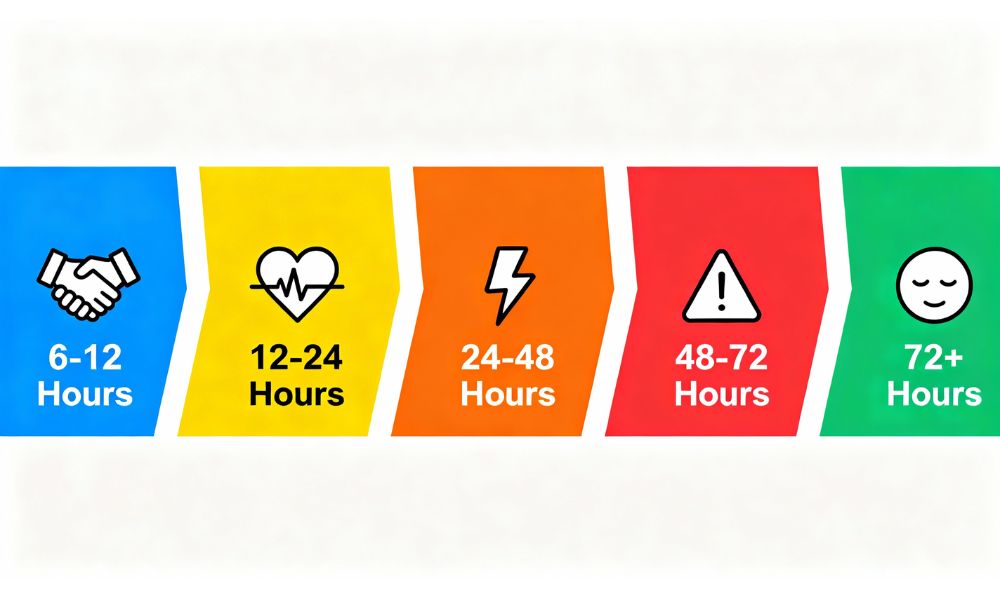
Hour-by-hour alcohol withdrawal symptoms timeline from 6 hours to 72+ hours

6–12 Hours After Your Last Drink

This is when early withdrawal usually begins. Mild symptoms may start even while alcohol is still in your system.

Common symptoms include:

  • Anxiety or feeling “on edge”
  • Tremors or “the shakes,” especially in the hands
  • Headache, nausea, loss of appetite
  • Sweating, rapid pulse, trouble sleeping

For many people, this stage feels like a severe hangover, but it is the first sign that your nervous system has become dependent on alcohol. If you drink to relieve these symptoms, that’s a strong indicator of alcohol dependence.


12–24 Hours: Symptoms Escalate

As blood alcohol levels continue to fall, the brain’s overactivity becomes more pronounced.

You may experience:

  • Worsening tremors and anxiety
  • Irritability, restlessness, difficulty concentrating
  • Nausea, vomiting, stomach discomfort
  • Elevated heart rate and blood pressure

Some people develop alcoholic hallucinosis in this window—seeing, hearing, or feeling things that aren’t there while remaining otherwise alert and oriented. This is distinct from delirium tremens but still a warning sign that withdrawal is more than “just” a hangover.


24–48 Hours: Peak of Physical Discomfort

Between 24 and 48 hours, symptoms generally reach their peak for many people.

Potential symptoms:

  • More intense tremors and sweating
  • Pronounced anxiety, agitation, feeling unable to sit still
  • Difficulty sleeping despite exhaustion
  • Nausea, vomiting, diarrhea
  • Fluctuations in blood pressure and heart rate

Seizures most commonly occur in this period, particularly in those with long-term heavy use, a history of withdrawal seizures, or concurrent use of sedative medications. Anyone who has a seizure, loses consciousness, or develops chest pain in this window needs emergency medical care.

Learn more about seizure and delirium tremens risk during alcohol withdrawal.


48–72 Hours: Highest Risk Window (Delirium Tremens)

This phase is often where the most serious complications arise.

In a small but critical proportion of people, delirium tremens (DTs) can develop, characterised by:

  • Severe confusion and disorientation
  • Agitation, aggression, intense fear or paranoia
  • Fever, heavy sweating, racing heart
  • Vivid hallucinations and disturbed sleep-wake cycles

DTs usually start 48–72 hours after the last drink and can last several days. Untreated, mortality has historically been reported in the 5–25% range; with modern medical care, that risk drops significantly but remains serious. This is why people at moderate or high risk are typically advised to detox in a monitored setting rather than alone.


72 Hours and Beyond: Symptoms Ease, New Challenges Begin

By day 3–5, the most intense physical symptoms (shakes, sweating, nausea) usually begin to subside. However, that doesn’t mean recovery is “done.”

Lingering issues often include:

  • Insomnia or disrupted sleep
  • Fatigue and low energy
  • Irritability, anxiety, low mood
  • Poor concentration or “brain fog”
  • Ongoing cravings for alcohol

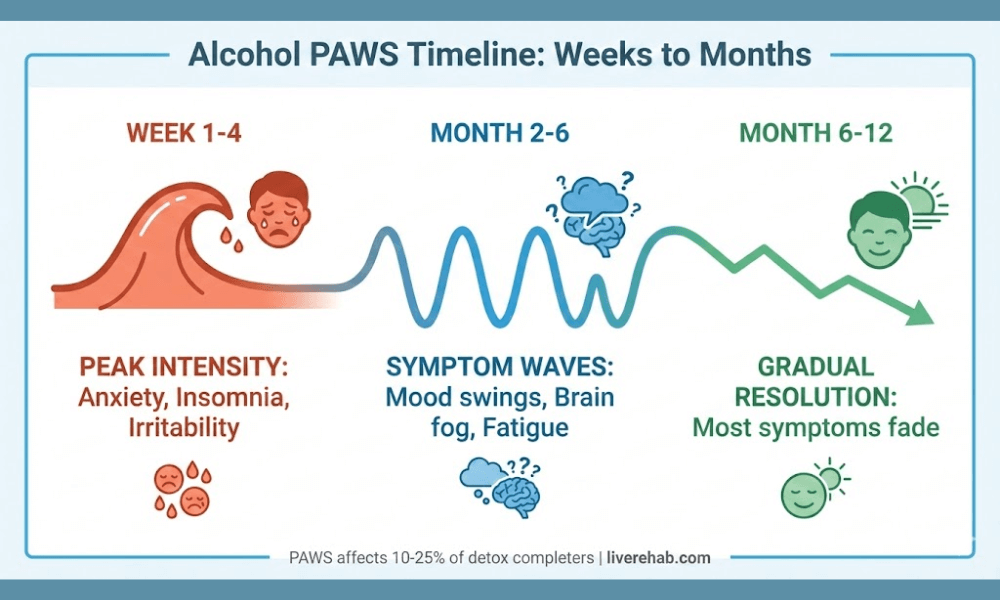
These lingering symptoms are sometimes referred to as Post-Acute Withdrawal Syndrome (PAWS) and can last for weeks or months, especially after years of heavy use. Without ongoing support, this is a high-risk period for relapse.

Read more: Alcohol PAWS – Post-Acute Withdrawal Symptoms Explained.


Factors That Can Change Your Timeline

Not everyone follows this exact pattern. Key factors that influence both timeline and severity include:

  • How much and how often you drink
  • How long you’ve been drinking heavily
  • Previous withdrawal episodes (kindling effect)
  • Age and general physical health
  • Liver function and nutritional status
  • Co-occurring mental health conditions

For example, someone drinking heavily every day for 10 years is far more likely to experience prolonged symptoms and complications than someone with a shorter history and lower intake.

For a deeper dive into risk factors and severity, see What Determines Your Detox Timeline & Severity?


Professional monitoring vital signs during safe home alcohol detox

When Is It Safe to Detox at Home?

Home detox can be appropriate for some people, but only under clear conditions and medical guidance. Generally, it may be considered if:

  • You drink at a moderate but regular level (not extreme daily intake)
  • You have no history of seizures or DTs
  • Vital signs and basic blood tests are stable
  • You have a safe, alcohol-free home environment
  • You have access to medical supervision (e.g., telehealth, scheduled check-ins)
  • There’s a clear plan for emergency escalation

If any of the following apply, you should not attempt unsupervised home detox:

  • Past withdrawal seizures or DTs
  • Serious heart, liver, or kidney disease
  • Pregnancy
  • Active suicidal thoughts or severe psychiatric symptoms
  • Lack of safe housing or reliable support

Not sure which category you’re in? Our Alcohol Detox & Recovery Guide explains inpatient, outpatient, and home-based options in detail.


How a Structured Home Detox Protocol Helps

A structured home detox protocol is very different from “going cold turkey” alone. Done correctly, it typically includes:

  • A pre-detox medical assessment (history, vitals, bloodwork)
  • A personalized plan for medications (e.g., benzodiazepines, thiamine)
  • Daily or twice-daily check-ins (video or phone) during the first 72 hours
  • Clear guidance on what to expect at each stage of the timeline
  • Red-flag criteria for immediate emergency care
  • Transition plan into ongoing therapy and support after day 5–7

This approach aims to flatten the curve of withdrawal – reducing peak symptoms, managing risk, and helping you remain functional enough to continue working or caring for family where safe.

Liverehab’s Functional Recovery Protocol is built specifically for high-performing individuals who need medically-informed home detox with minimal disruption. Learn more about our Alcohol Recovery Home Detox program.


When to Seek Emergency Help

Regardless of where you detox, seek urgent medical help if you or someone you’re supporting experiences:

  • Seizures or loss of consciousness
  • Chest pain, severe shortness of breath, or very irregular heartbeat
  • Confusion, disorientation, or inability to recognize people or place
  • Hallucinations plus agitation or high fever
  • Vomiting that prevents keeping down fluids or medications

These are not “toughing it out” moments; they are medical emergencies.


FAQ: Quick Answers About the Timeline

Can withdrawal start sooner than 6 hours?

Yes. In heavy daily drinkers, early symptoms can begin as soon as 4–6 hours after the last drink, especially if blood alcohol levels fall rapidly.

How long until I feel “back to normal”?

Most people feel physically much better by days 5–7, but mental clarity, mood, and sleep can take several weeks to stabilise. Structured aftercare speeds this up.

Does everyone get seizures or DTs?

No. Only a minority develop severe complications, but it is impossible to guarantee who will. Prior complicated withdrawal, heavy long-term use, and poor health all increase risk.


Sources
[1] Alcohol Withdrawal Symptoms, Detox, Timeline, & Treatment https://americanaddictioncenters.org/alcohol/withdrawal-detox
[2] Alcohol Withdrawal: Symptoms, Treatment & Timeline https://my.clevelandclinic.org/health/diseases/alcohol-withdrawal
[3] Alcohol Withdrawal Syndrome – StatPearls – NCBI Bookshelf – NIH https://www.ncbi.nlm.nih.gov/books/NBK441882/
[4] Alcohol Withdrawal Timeline: What Symptoms to Expect in Days 1-5 https://www.therecoveryvillage.com/alcohol-abuse/how-long-alcohol-detox-take/
[5] Alcohol Withdrawal Timeline & Symptoms – What to Expect – Priory https://www.priorygroup.com/addiction-treatment/alcohol-rehab/alcohol-addiction-withdrawal
[6] Alcohol Relapse Rates & Statistics – The Recovery Village https://www.therecoveryvillage.com/alcohol-abuse/alcohol-relapse-statistics/
[7] Alcohol Detox at Home vs Rehab: What’s the Difference? https://rehabsuk.com/blog/alcohol-detox-at-home-vs-rehab-what-s-the-difference/

Filed Under: Blog

How to Break the Cycle of Addiction: A Step-by-Step Guide to Long-Term Recovery

Last Modified: December 4, 2025 | Originally created on April 8, 2025 By Denise

What Does Breaking the Cycle of Addiction Really Mean?

Breaking the cycle of addiction isn’t just about quitting a substance. It’s about changing your habits, mindset, and environment so you can build a better life; one where addiction no longer controls you.

At Live Rehab, we focus on holistic, non-traditional addiction recovery. That means helping you recover at home, without relying on expensive inpatient rehab programs.

Step 1: Understand Your Triggers

Every addiction has a trigger; something that sets off the craving. These can be emotional (like stress or sadness), social (like certain people), or environmental (like places or routines).

Action Tip:
Write down your top 3 triggers and how you usually react to them. Awareness is the first step in breaking the pattern.


Step 2: Build a Personalized Recovery Plan

A one-size-fits-all plan doesn’t work for addiction. You need something tailored to your life, values, and goals.

LiveRehab.com offers online courses and tools to help you do just that; from building healthy routines to managing cravings in real time.

Key Elements of a Good Recovery Plan:

  • Daily structure and routines
  • Emotional support (family, friends, or community)
  • Long-term goals to work toward
  • Coping strategies for when cravings hit

Step 3: Focus on Physical and Mental Healing

Addiction impacts both your body and mind. Recovery means healing both. That includes:

  • Getting enough sleep
  • Eating nutrient-rich foods
  • Exercising regularly
  • Practicing mindfulness or meditation

These steps rebuild your brain chemistry naturally, improving your mood and lowering relapse risk.


Step 4: Replace Addiction with Purpose

Many people relapse because they feel lost or empty. Finding purpose fills that void.

Ask yourself:

  • What gives your life meaning?
  • What hobbies or interests light you up?
  • How can you contribute to others?

Purpose is your most powerful tool in recovery.


Step 5: Stay Consistent, Even When It’s Hard

Recovery is not a straight path. You will have good days and bad days. What matters most is staying consistent.

If you slip, don’t give up. One mistake does not mean failure.

Use tools like our Live Rehab Recovery Journal or daily check-ins to track your progress and stay accountable.


Why LiveRehab.com Works for Thousands of People Worldwide

At Live Rehab, we’ve helped people in over 100 countries recover from addiction at home. No judgment. No shame. Just real strategies that work.

✅ 100% online
✅ Self-paced courses
✅ Affordable and private
✅ Designed for long-term success

Take the First Step Today → Explore Our Programs


Final Thoughts

You can break the cycle of addiction. It starts with small, consistent actions; like the ones above. You don’t need to hit rock bottom. You just need to be ready to take back your life.

We’re here to support you, every step of the way.

Filed Under: Blog, General Tagged With: addiction recovery long-term recovery quit addiction recovery at home Live Rehab mental health non-traditional rehab

How to Start Addiction Recovery From Home – Without Expensive Rehab

Last Modified: March 31, 2025 | Originally created on March 28, 2025 By Denise

Starting addiction recovery doesn’t have to mean checking into a facility or spending thousands of dollars. For many people, the most effective, long-lasting recovery begins right at home.

At Live Rehab, we help people take control of their recovery journey with tools and support designed specifically for at-home addiction recovery. Whether you’re dealing with substance abuse or behavioral addictions, here’s how to get started from the comfort of your own home.

Why At-Home Recovery Works

Traditional rehab can feel overwhelming, expensive, and out of reach. But recovery doesn’t have to look like that. More people are turning to home-based recovery because it offers:

  • Privacy and comfort
  • Flexible scheduling
  • Lower costs
  • Sustainable daily habits

Research shows that recovery rooted in real-life routines can lead to better long-term results, especially when people are empowered with the right guidance.

Step 1: Get Honest With Yourself

The first step is acknowledging that you want to change. Whether you’re trying to quit drinking, stop using drugs, or break free from a behavioral addiction like gambling or porn, clarity is key.

Take a moment to reflect on:

  • What’s driving your addiction?
  • How is it impacting your life?
  • What do you want your life to look like 6 months from now?

These questions form the foundation of a recovery plan that works for you.

Step 2: Find a Program That Works For You

Not all recovery programs are created equal. If you’re looking for something that fits into your daily life without disrupting everything, an online recovery program can be the perfect solution.

At Live Rehab, we offer:

  • Free substance abuse courses to get started
  • Affordable full recovery programs designed to be completed from home
  • Ongoing support and resources without the pressure of in-person rehab

Explore our free addiction courses
See pricing for full programs

Step 3: Build a Daily Recovery Routine

One of the biggest benefits of recovering at home is that you get to shape your daily routine. A strong recovery routine should include:

  • Daily check-ins (journaling or self-reflection)
  • Physical movement or mindfulness
  • Learning new coping skills
  • Staying connected to a support system

We help you design a routine that works around your lifestyle – not the other way around.

Step 4: Stay Accountable and Keep Growing

Recovery isn’t a one-time decision. It’s a journey. With the right tools, you can make lasting changes. That’s why our programs focus on emotional, physical, spiritual, and psychological healing; the four pillars of true recovery.

Ready to Start?

If you’re ready to take your first step toward addiction recovery from home, we’re here to help.

Have questions? Contact us

Want updates and free recovery tools? Sign up for our newsletter.

Filed Under: Blog, General

Breaking Free: The Best Online Addiction Recovery Course for 2025

Last Modified: March 11, 2025 | Originally created on March 11, 2025 By Denise

Finding effective addiction recovery resources can feel overwhelming. Whether you’re struggling with substance abuse, behavioral addictions, or compulsive habits, the right support can make all the difference.

At Live Rehab, we specialize in self-paced online recovery courses designed to empower you—without the need for in-person rehab or expensive therapy.

Why Online Recovery Courses Work

✅ Learn at Your Own Pace – No pressure, no strict schedules.
✅ Confidential & Private – Recovery on your terms, in your own space.
✅ Evidence-Based Strategies – Practical tools to break free from addiction.

Filed Under: Blog, General

  • « Previous Page
  • 1
  • 2
  • 3
  • 4
  • …
  • 25
  • Next Page »

Popular Posts

Empowering Your Recovery Journey: Achieve Sobriety from the Comfort of Home with Live Rehab

Alcohol or Substance Abuse in the Workplace

Living Intentionally in Addiction and Recovery

Spirituality in Recovery

Co-Occurring Disorders (Dual Diagnosis) and why you need treatment for your mental health and addiction at the same time

What our Students Say

“I’m very much enjoying this course. The instructor is clear, concise, motivating, and knowledgeable.”
☆☆☆☆☆
~ Marla, Udemy Student

“The instructor is highly trained to be providing this course to those who are chemically dependent. The content of the lectures is comprehensive and very informative.”
☆☆☆☆☆
~ Matt, Udemy Student

Recent Posts

Vitamins and Nutrition for Alcohol Detox: What Your Body Really Needs

December 21, 2025 By Denise

When you stop drinking, your body is not just … [Read More...]

Benzodiazepines for Alcohol Withdrawal: The Gold Standard Treatment

December 18, 2025 By Denise

Benzodiazepines for Alcohol Withdrawal: The Gold … [Read More...]

Can You Work During Alcohol Detox? (Safe Home Guide)

December 11, 2025 By Denise

You can work during alcohol detox in some … [Read More...]

Tweets by @live_rehab

Tweets by live_rehab

Connect on Facebook

Live Rehab

Favorite Pins

Sobriety on your terms

We understand that traditional rehab may not be a realistic choice for you. If you’re feeling bad about destroying relationships, clouded decision making and being addicted, Live Rehab will guide you in helping you break free.

We’ve helped hundreds of people get sober from home.

Our students are:

– Happy
– Sober
– Clear Headed
– Free from the chains of addiction
– Motivated
– Energetic

Connect with Us

  • Facebook
  • Instagram
  • Pinterest
  • Twitter

Product

Recovery & Sobriety Courses

Pricing

Learn

Comprehensive Alcohol Detox and Recovery Guide (2026)

Blog

Resources

Company

About Us

Contact

Copyright © 2025 Live Rehab