Live Rehab

  • All-Access Pass
  • Programs
    • Alcohol Freedom
  • Articles
    • Alcohol Detox & Recovery: The Complete Guide (2026)
  • Login
  • Get Started Now

Finding Balance

February 3, 2015 By Denise

Finding the right balance in life is hard regardless of your situation or circumstances. It’s much harder when you are struggling with an addiction and trying to figure out your plan for sobriety.

You see, traditional treatment programs oftentimes fail to recognize that a balance is essential to staying sober. When you give 200% to something because society tells you that it is the only way to achieve that goal, burnout is going to happen. It may not happen right away but it is bound to happen sooner or later.

Think of recovery as a spectrum. Some people need to immerse themselves all day, every day, to only recovery related activities in order to keep their mind off of using. And, that’s okay. But really, this method isn’t for everybody. Some people work full time, have families, go to school, go to church, etc. The key to staying sober is finding the right balance that works for you.

My challenge for you is this. Write down all the areas in your life where your presence is needed. Do you have pets, children, parents, siblings, friends? Do you need to take care of your home or maybe your career needs to stay a priority. Then try to figure out how you can find a balance. Instead of using drugs or alcohol, of course, replace that time with recovery related activities. But, what about everything else? You don’t have to stop being who you are in order to stay sober.
Filed Under: Blog, General Tagged With: action, balance, dependency, drug use, drugs, planning to quit, recovery, rehab, sobriety, substance abuse, substance abuse treatment

Taking Action

January 15, 2015 By Denise

5
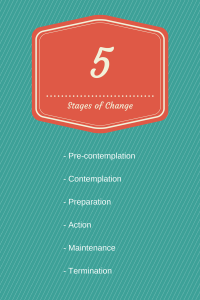
We have been discussing the five stages of change which essentially include:

Pre-contemplation

Contemplation

Preparation

Action

Maintenance

Termination

Let’s talk today about how to go from preparation to action. We find this is one of the most difficult transitions to make. During the contemplation stage a person may start to see negative effects that their substance use is having on their mind, body, or people around them yet making a change has not really crossed their mind or if it has, it may be very brief considerations. The preparation stage on the other hand, is when a person fully acknowledges to themselves that a change must occur and must occur soon. However, what is one have to do to change? There may be many circumstances that prevent such a life change or conditions that keep a person from accessing the tools they need to be successful. While, it may be an “ah ha” moment when this recognition occurs it’s not enough sometimes.

Taking action is hard work. Think about the action stage like this. What is one thing I can do today to move me forward on this path of sobriety? It’s also important to know that the action stage includes not using substances or on a very aggressive taper down. For some people, especially those who have been using alcohol or benzodiazepines, a small amount of use may be necessary to avoid deadly withdrawals. Action means that you have made the commitment to participate in a plan. This plan can be a specific treatment program but it doesn’t have to be. While professional help may be ideal it is not always an option. Have you committed? Are you substance free today? Congratulations! You are taking action!


Filed Under: Blog Tagged With: action, dependency, disease model of addiction, drug use, drugs, dual diagnosis treatment centers, recovery, rehab, sobriety, stages of change, substance abuse, substance abuse treatment

Is it Possible to Terminate your Recovery?

January 13, 2015 By Denise

Yesterday we talked about the stages of change. The six stages of change are:

Pre-contemplation

Contemplation

Preparation

Action

Maintenance

Termination

When talking about addiction and drug abuse do you think it is possible for one to achieve termination? To achieve termination the user must be absolutely confident that they will never relapse, under any circumstance. This last stage involves some controversy. Some critics believe that a user can only ever make it to the maintenance stage and will have to always be aware of the risks, forever. Others believe that after long term sobriety, the risk of relapsing is completely gone.

Want to know what our opinion is?

We believe that every single individual is different. While most users follow the same pattern, not every user will follow the same timeline. Therefore, we do believe that for some people, the termination stage may be possible. The only person that can know for absolute certainty is the user and that often comes after years of deep self-reflection and determination.

Hi

Filed Under: Blog Tagged With: addiction, recovery, rehab, sobriety, stages of change, substance abuse, substance abuse treatment

Stages of Change

January 12, 2015 By Denise

Happy Monday! This week’s topic is: Stages of Change

People who use drugs, alcohol, or struggle with any sort of addiction go through different stages. This is called stages of change. Where do you stand on this?

  1. Pre-contemplation – the stage where users do not even recognize that there is a problem.
  2. Contemplation – this is where the user starts to recognize that there may be a problem and is having thoughts about possibly making a change.
  3. Preparation –the stage where the user begins to prepare to change. Maybe they are thinking about setting a date  to quit.  https://www.liverehab.com/?p=1272
  4. Action –the user is actively participating in a program or has started to obtain sobriety. The user is on day one of sobriety or after.
  5. Maintenance –when sobriety has been achieved for some time and the user is working hard on maintaining their sobriety.
  6. Termination – when someone has obtained full sobriety and is confident that they can be in any situation at any time without the possibility of relapse.

Filed Under: Blog, General Tagged With: action, addiction, contemplation, dependency, disease model of addiction, drugs, heavy user, maintenance, planning to quit, pre-contemplation, preparation, recovery, sobriety, stages of change, substance abuse, termination

Is there a simple drug abuse definition?

December 22, 2013 By Nick

Does something like caffeine fall under a drug abuse definition?

Is there a simple drug abuse definition?

Often times, people come to us looking for a specific drug abuse definition hoping that we can provide clear answers in times of definite struggle.  Obviously people ask because they feel as though we might have the answer that tells them if they are dealing with drug abuse or if their problems aren’t really abuse.  Let’s take a look at a simple drug abuse definition from a dictionary:

drug abuse

noun

1. addiction to drugs.

2. substance abuse involving drugs.

(source: http://dictionary.reference.com/browse/drug+abuse?s=t)

Well that doesn’t tell us too much other than an addiction to drugs which we probably could have figured out from the question itself.  So how else can we define drug abuse?  Essentially the definition of drug abuse can be explained as when drug use impacts normal every day actions or life.  For example, having a few drinks every now and again might not constitute drug abuse.  However, if those times when you have a few drinks always leads into negative situations then you might have a problem on your hands.

Official Drug Abuse Definition

Officially speaking the definition of drug abuse, according to University of Maryland Medical Center, is ” the use of illegal drugs, or the misuse of prescription or over-the-counter drugs for at least a year with negative consequences”.  But for many reasons this misses the mark!  What about those people who have problems with legal drugs like alcohol or cigarettes? Do those drugs fit the drug abuse definition as the University of Maryland Medical Center says? Not according to them.

The rest of world sees things differently too.  Take for example the World Health Organization who does not take a definition of drug abuse at all and instead chooses to exclude it because it is too ambiguous for most people. Really they are claiming that the definition of drug abuse can be done in so many ways that one specific answer can’t be right.

You can see that the process of defining drug abuse can be complex and different depending on which resource you ultimately choose to use.  We think that if you feel as though you have a problem with a particular drug then you should be able to define that as drug abuse if you choose to.  Even innocuous drugs such as caffeine can cause a person to be addicted to them and as soon as their world starts revolving around that then it could become addiction.

Why the ambiguity with drug abuse definition?

The ambiguity of a drug abuse definition comes from the medical community wanting to have clearly defined limits, roles and answers to common problems.  The issue is that not everyone fits into a clear, easy one size fits all and some people fall through the cracks.  We try and be as objective as possible to help people when they need it the most.

Hopefully this has helped some of you to understand why we can’t always come up with a drug abuse definition that clearly fits an individual person but we try hard to provide at least a clear path for understanding and then you can choose your own way to deal with it.  Do you have questions we can help you answer?

Filed Under: Blog Tagged With: alcohol, caffeine, drug abuse definition, nicotine?, substance abuse

  • « Previous Page
  • 1
  • …
  • 3
  • 4
  • 5

Popular Posts

Empowering Your Recovery Journey: Achieve Sobriety from the Comfort of Home with Live Rehab

Alcohol or Substance Abuse in the Workplace

Living Intentionally in Addiction and Recovery

Spirituality in Recovery

Co-Occurring Disorders (Dual Diagnosis) and why you need treatment for your mental health and addiction at the same time

What our Students Say

“I’m very much enjoying this course. The instructor is clear, concise, motivating, and knowledgeable.”
☆☆☆☆☆
~ Marla, Udemy Student

“The instructor is highly trained to be providing this course to those who are chemically dependent. The content of the lectures is comprehensive and very informative.”
☆☆☆☆☆
~ Matt, Udemy Student

Recent Posts

Can You Work During Alcohol Detox? (Safe Home Guide)

December 11, 2025 By Denise

You can work during alcohol detox in some … [Read More...]

Alcohol Detox vs Rehab: Key Differences Explained

December 9, 2025 By Denise

Alcohol detox vs rehab is one of the most … [Read More...]

Alcohol PAWS: Post-Acute Withdrawal Syndrome Symptoms & Management

December 6, 2025 By Denise

Alcohol PAWS symptoms - lingering anxiety, … [Read More...]

Tweets by @live_rehab

Tweets by live_rehab

Connect on Facebook

Live Rehab

Favorite Pins

Sobriety on your terms

We understand that traditional rehab may not be a realistic choice for you. If you’re feeling bad about destroying relationships, clouded decision making and being addicted, Live Rehab will guide you in helping you break free.

We’ve helped hundreds of people get sober from home.

Our students are:

– Happy
– Sober
– Clear Headed
– Free from the chains of addiction
– Motivated
– Energetic

Connect with Us

  • Facebook
  • Instagram
  • Pinterest
  • Twitter

Product

Recovery & Sobriety Courses

Pricing

Learn

Comprehensive Alcohol Detox and Recovery Guide (2026)

Blog

Resources

Company

About Us

Contact

Copyright © 2025 Live Rehab